معرفی
Prof. Miriam Fritsch is a W2 Professor at the Department of Experimental Physics at Ruhr-Universität Bochum, specializing in hadron and nuclear physics. Her research focuses on advancing the theoretical and experimental understanding of quantum chromodynamics (QCD) and the properties of hadrons. She leads the PANDA experiment at FAIR in Darmstadt and analyzes data from the BESIII experiment in Beijing. Her work emphasizes energy scan measurements and partial wave analysis to study particle states.
Education:
- Dr. rer. nat. in Hadron Physics (2002), Friedrich-Alexander-Universität Erlangen-Nürnberg
- Diploma in Physics (Experimental Nuclear and Particle Physics, 1997) and Biology (Zoology, 1996), both from Friedrich-Alexander-Universität Erlangen-Nürnberg
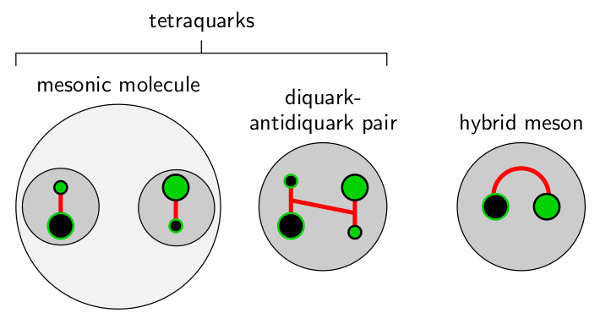
Research Interests: Experimental hadron physics, QCD dynamics, exotic particle states, detector development (e.g., luminosity detectors, monolithic silicon pixel sensors), and collaboration leadership in international experiments like PANDA and BESIII. Her projects include the Common Partial Wave Analysis Framework (ComPWA) and HV-MAPS sensor technology.
Career Highlights:
- Since 2016: W2 Professor at Ruhr-Universität Bochum
- 2011–2016: Helmholtz Young Investigators Group Leader (PALUMA) at Johannes Gutenberg University Mainz
- Extensive international collaborations, including BaBar, PANDA, and BESIII
Advisory Roles: Member of PANDA Management Board, DFG reviewer, and Physics Letters B referee. She also manages detector systems and coordinates international teams in FAIR and other facilities.
Labs/Teams: Leads the PANDA experiment’s luminosity detector team and contributes to the BESIII collaboration. Develops advanced detector technologies for precision measurements.