معرفی
Prof. Marc Wagner is a Heisenberg Professor at the Institute of Theoretische Physik (Institute of Theoretical Physics) at Goethe University Frankfurt. His research focuses on theoretical particle physics and quantum field theory, with particular emphasis on lattice gauge theory applications to exotic hadron spectroscopy.
Wagner completed his academic training with a Habilitation in 2015 on "Calculation of masses, decays and structure of hadrons using lattice QCD methods" at Goethe University Frankfurt. Prior to this, he earned his Doctoral Thesis in 2006 on "The pseudoparticle approach in SU(2) Yang-Mills theory" from Friedrich-Alexander-Universität Erlangen-Nürnberg, supervised by Prof. Frieder Lenz. His earlier studies included a Diplomarbeit in 2002 on surface reconstruction with B-Spline surfaces and a Studienarbeit in 2001 on surface reconstruction from point clouds, both at Friedrich-Alexander-Universität Erlangen-Nürnberg under Prof. Günther Greiner.
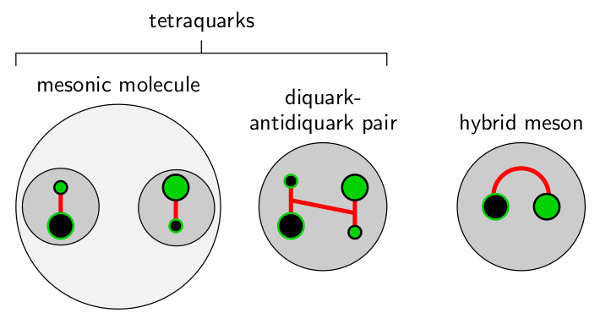
Wagner's research program centers on lattice quantum chromodynamics (QCD) computations of exotic hadronic states. His group investigates exotic mesons from first principles using lattice QCD, with particular focus on tetraquarks (systems of two quarks and two antiquarks), hybrid mesons (quark-antiquark pairs with excited gluon fields), and mesonic molecules (bound states of two ordinary mesons). The group also studies inhomogeneous phases in QCD-inspired models as part of the DFG-funded Collaborative Research Center TransRegio 211 "Strong-interaction matter under extreme conditions" (Project A03).
His recent publications demonstrate a strong focus on heavy exotic mesons, particularly tetraquarks containing bottom and charm quarks. The research combines advanced lattice QCD techniques with theoretical frameworks like the Born-Oppenheimer approximation to investigate the structure and binding mechanisms of these exotic states. The work has implications for understanding quantum chromodynamics in non-perturbative regimes and for interpreting experimental results from facilities like the LHC.
As a Heisenberg Professor, Wagner holds one of Germany's most prestigious research positions, recognizing his significant contributions to theoretical particle physics. His work is supported through various research collaborations and funding mechanisms including the DFG Collaborative Research Center.
Prof. Wagner actively supervises Bachelor's, Master's, and PhD students, guiding the next generation of theoretical particle physicists. His research group participates in international collaborations including the European Twisted Mass Collaboration (ETMC), contributing to the global effort in lattice QCD research.
The research group maintains strong connections with experimental facilities and collaborates with physicists working at institutions like GSI Helmholtzzentrum für Schwerionenforschung. They regularly present their findings at international conferences including the annual Lattice Field Theory symposium and specialized workshops on hadron physics.