معرفی
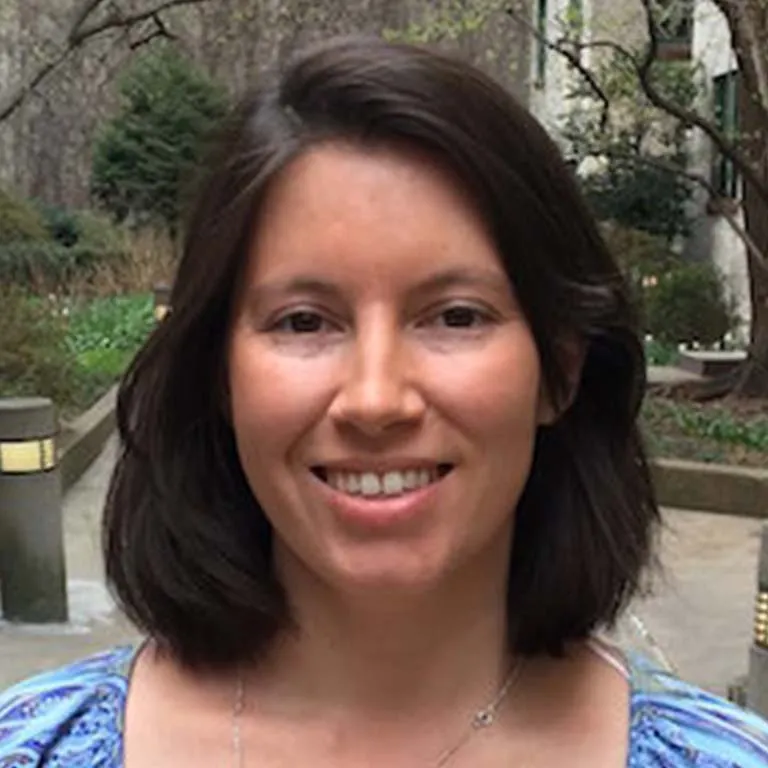
Milena Shattuck is a Doctoral Lecturer and Advisor in the Department of Anthropology at Hunter College, part of the City University of New York (CUNY) system. She teaches the Human Biology Senior Capstone course and serves as an academic advisor to human biology majors within the School of Arts and Sciences.
Dr. Shattuck's academic background includes:
- PhD in Anthropology from the University of Illinois, Urbana-Champaign
- BS in Biology from the University of California, San Diego
- BA in Biological Anthropology from the University of California, San Diego
As a biological anthropologist, Dr. Shattuck's research focuses on understanding human evolution through multiple perspectives. Her primary interest lies in genetics, particularly as it relates to brain and behavioral evolution. She has conducted collaborative research incorporating behavior, endocrinology, morphology, life history, and cultural anthropology to better understand human biology. Her work often examines evolutionary patterns in vertebral morphology, longevity, and brain size across mammalian species, with particular attention to primates and hominins. Her research demonstrates an interdisciplinary approach that bridges biological anthropology, evolutionary biology, and comparative anatomy.
Dr. Shattuck's publication record shows consistent research activity with a focus on evolutionary biology, particularly examining relationships between skeletal morphology, longevity, and brain evolution in mammals. Her work frequently combines genetic, morphological, and comparative approaches to understand evolutionary patterns. She has published in prestigious journals including Nature Ecology and Evolution, Proceedings of the National Academy of Sciences, and American Journal of Physical Anthropology.
Dr. Shattuck serves as an advisor to human biology majors at Hunter College. Prior to joining Hunter College's Department of Anthropology as a doctoral lecturer in 2017, she worked as a visiting assistant professor at Duke University's Department of Evolutionary Anthropology and as an adjunct faculty member at both New York University and Hunter College. Her career path reflects the transition many academics make from research-intensive positions to teaching-focused roles in higher education.