معرفی
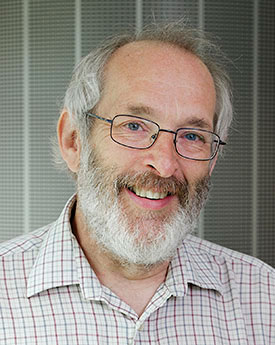
Dr. Michael Thompson is a Senior Lecturer in Experimental Condensed Matter Physics at Lancaster University's Department of Physics. He holds a prestigious Royal Academy of Engineering Research fellowship focused on "Graphene transistors for cryogenic electronics" and is actively involved in cutting-edge research at the intersection of quantum technologies and low-temperature physics.
Thompson's research focuses on developing electronics that operate at cryogenic temperatures using 2D materials, with applications spanning from medical sensors and materials characterization to deep space communications and dark matter searches. His work is particularly significant for building scalable quantum computers. He has transitioned from developing optoelectronic devices using narrow bandgap semiconductors and nanowires to studying quantum transport in 2D materials, where he has developed ultra-sensitive magnetometers using graphene Josephson junctions and created a new cryogenic platform in collaboration with Oxford Instruments.
His recent publications demonstrate a strong focus on quantum sensing applications, particularly for dark matter detection through the QUEST-DMC project, and advancing cryogenic electronics for quantum computing. The research spans thermal transport in nanoelectronic devices at ultra-low temperatures, graphene-based quantum devices, and superfluid helium applications for cosmological studies.
Thompson has received significant recognition including:
- Royal Academy of Engineering Research fellowship
- Research Impact Award
- Science and Technology Dean's Award for Excellence in External Engagement and Impact
He currently supervises two PhD students, Seth Bennett and Emily Gamblen, working in Low Temperature Physics and Quantum Nanotechnology. His research is supported through multiple grants including the Graphene Transistors for Cryogenic Electronics project (2019-2024) and the LANCQTFP: Quantum Enhanced Superfluid Technologies for Dark Matter and Cosmology (2020-2025).
Thompson is an active member of the European Microkelvin Collaboration (EMP) and collaborates extensively with the National Graphene Institute and the EU's Graphene Flagship initiative. His work bridges fundamental physics with practical applications, positioning him at the forefront of quantum technology development.