معرفی
Michael Ratz serves as Assistant Professor and Group Leader at Karolinska Institute's Department of Cell and Molecular Biology since 2023, following positions as Visiting Scholar at Stanford University (2023), Researcher at KTH (2021-2023), and Postdoctoral Researcher at Karolinska Institute (2016-2021). His work bridges neuroscience, developmental biology, and genomics through innovative molecular tool development.
His educational background includes:
- PhD in Bioinformatics and Computational Biology from Max Planck Institute for Biophysical Chemistry, Germany (2012-2016)
Ratz's research focuses on deciphering neural circuit assembly mechanisms in mammalian brain development. He pioneers cellular barcoding and spatial transcriptomics to investigate how genomic information translates into synaptic connectivity, with implications for neurodevelopmental disorders like autism. His lab develops scalable approaches for mapping neural networks at molecular resolution, combining lineage tracing with circuit-level analysis.
Analysis of his 2021-2025 publications reveals a dominant trend toward integrated spatial and lineage-based genomics. Key themes include neural circuit mapping (60% of recent work), single-cell transcriptomics (25%), and advanced imaging technologies (15%), with increasing emphasis on CRISPR perturbations and in vivo circuit engineering since 2023.
Ratz secures major research funding through:
- Molecular dissection of neural circuit assembly (Swedish Research Council, 2023-2026)
- Deciphering astrocyte neurogenic potential (Deutsche Forschungsgemeinschaft, 2017-2019)
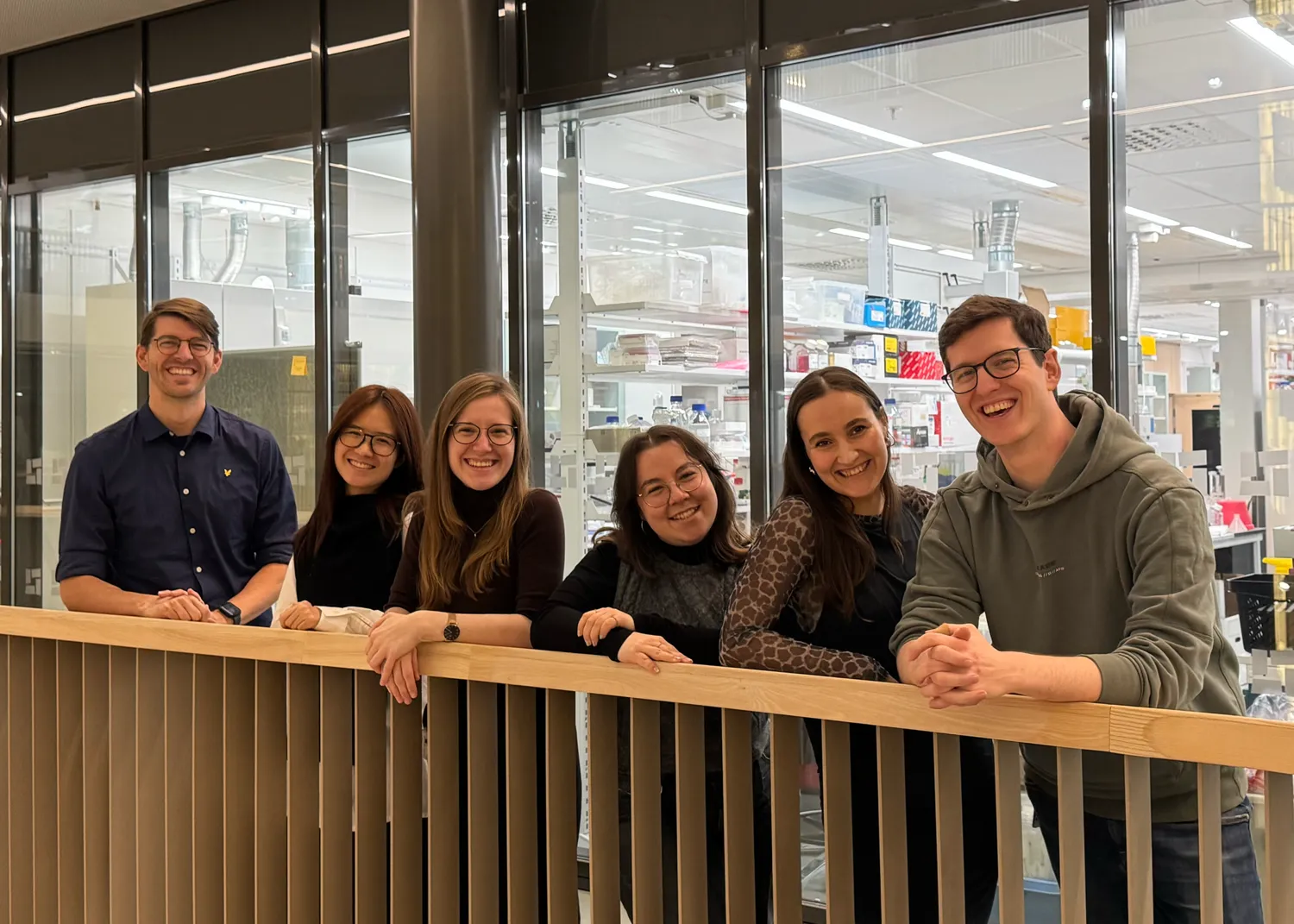
He directs the Developmental Neurogenomics group, which operates at the intersection of wet-lab molecular engineering and computational analysis. The lab specializes in building endogenous cellular barcoding systems combined with spatial transcriptomics to achieve high-throughput neural circuit mapping, with recent work focusing on cortical circuit assembly algorithms.