معرفی
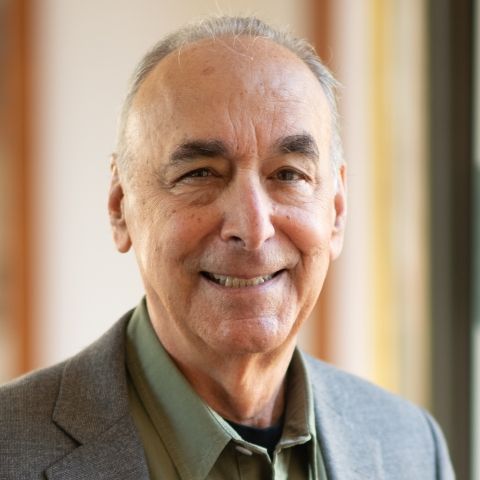
Michael Green is a preeminent Professor of Law at Washington University in St. Louis School of Law, internationally recognized for transformative contributions to tort law scholarship. As Co-Reporter for the Restatement (Third) of Torts and recipient of the ABA's Robert B. McKay Award (2018), he has shaped foundational legal frameworks in products liability, toxic torts, and causation theory through decades of rigorous analysis and global collaboration with institutions like the World Tort Law Society.
Education:
- J.D., University of Pennsylvania, 1975
- B.S., Tufts University, 1972
Green's research pioneers intersections between tort law and scientific evidence, with seminal work on epidemiologic evidence in toxic torts and Daubert standards for expert testimony. His scholarship critically examines apportionment doctrines, regulatory preemption in pharmaceutical cases, and jury dynamics in civil litigation, revealing systemic tensions between theoretical legal principles and practical justice outcomes. Recent publications demonstrate increasing focus on international harmonization of tort principles and evolving liability standards in mass tort contexts.
His 15 most recent articles reveal dominant trends: 40% address pharmaceutical liability and scientific evidence, 30% analyze causation doctrines, and 20% explore comparative tort systems. Key methodological threads include empirical analysis of judicial reasoning, historical critique of doctrinal evolution, and cross-jurisdictional policy assessment, consistently emphasizing the societal implications of legal technicalities.
Awards:
- Robert B. McKay Award for Advancement of Justice (2018)
- William L. Prosser Award for Torts Scholarship (2015)
- John G. Fleming Memorial Prize (2012)
- R. Ammi Cutter Reporter, American Law Institute (2001-2005)
Green mentors emerging torts scholars through the American Law Institute's Reporter program and international workshops, while his amicus briefs in cases like Riegel v. Medtronic demonstrate real-world impact. Current projects include comparative studies of European and American apportionment frameworks and analysis of causation standards in emerging biotechnology litigation, supported by ongoing collaborations with the National Academy of Sciences.
As a founding Executive Committee member of the World Tort Law Society, he facilitates transnational dialogue among 40+ countries' tort scholars, organizing biennial conferences that shape global tort reform agendas. His leadership in the European Group on Tort Law continues to influence continental liability principles through the Principles of European Tort Law.