معرفی
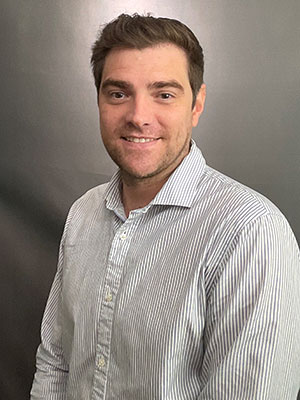
Matt Bailey Ross is a Lecturer in Environmental and Engineering Geology at the School of Geography, Earth and Environmental Sciences, University of Plymouth. He joined the university in 2022 after a 13-year career in industry, bringing extensive experience in geo-energy, geochemistry, and radioactive waste management. He is actively involved in research and supervises postgraduate students in areas related to subsurface sustainability and decarbonisation.
Education:
- Doctorate in Engineering and Technology – Resource recovery from passive mine water treatment sites, Newcastle University (Awarded: 1 Jan 2016)
- MSc in Contaminated Land – University of Portsmouth (Awarded: 1 Oct 2007)
His research focuses on the role of the subsurface in decarbonisation, particularly in low-temperature geothermal systems and the safety of radioactive waste disposal. He investigates groundwater-rock interactions, bentonite engineered barriers, and resource recovery from abandoned mines. His work bridges environmental geology and engineering, with strong applications in sustainable development and pollution remediation.
His recent publications highlight a trend toward sustainable urban energy systems, nuclear waste safety, and resource recovery. Key themes include the environmental impact of heat pumps, the geochemical behavior of engineered barriers, and the mechanical properties of backfill materials in geological repositories.
Scientific Awards and Professional Memberships:
- Chartered Scientist (CSci), Science Council (2013–Present)
- Fellow of the Geological Society (FGS) (2006–Present)
- Member of the Royal Society of Chemistry (MRSC) (2019–Present)
- Committee Member, South West Regional Group of the Geological Society
He has led research projects in collaboration with Nuclear Waste Services, the Environment Agency, and DEFRA. His industry experience includes managing research for the UK’s geological disposal facility programme and optimizing remediation techniques for contaminated land. He is currently accepting PhD students for projects in geo-energy, geochemistry, and resource sustainability, supporting both self-funded and externally funded candidates.
His work contributes to UN Sustainable Development Goals, particularly in affordable and clean energy (SDG 7), industry innovation (SDG 9), climate action (SDG 13), and life on land (SDG 15). He is actively engaged in interdisciplinary research and collaborates with academic and industrial partners across the UK and internationally.
حوزههای پژوهشی