معرفی
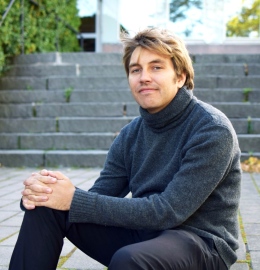
Martin Kolk is an Associate Professor (Docent) and Senior Lecturer at Stockholm University's Department of Sociology and Stockholm University Demography Unit (SUDA). He also holds affiliations with Åbo Akademi in Vaasa and the Institute for Future Studies (IFFS). His research spans multiple institutions including collaborations with Academica Sinicia in Taipei, Taiwan.
Kolk's primary research interests focus on kinship and intergenerational demography, with additional expertise in historical demography, family dynamics, mortality patterns, union formation, and the intersection of cultural and genetic evolutionary approaches with demographic processes. He frequently employs linked register and parish data with micro-level information to examine demographic change from the mid-18th century to the present day.
His publication trends reveal a strong emphasis on long-term demographic analysis using Scandinavian register data, with significant contributions to understanding religious affiliation and mortality, kinship structures across generations, fertility patterns by socioeconomic status, and the demographic characteristics of LGBTQ+ populations. Recent work increasingly incorporates register-based studies examining social stratification, health outcomes, and religious influences on demographic behavior.
Kolk has contributed to several government reports including a Covid-19 mortality analysis for the Swedish Public Health Agency, a demographic study of China, and research on future census methodologies in Sweden. He is actively involved in major research initiatives examining long-term demographic and economic patterns across centuries using data from Sweden and Taiwan.
- Centre for Cultural Evolution - conducting interdisciplinary research on causal relationships shaping human culture
- Stockholm University Demography Unit (SUDA) - an international research group focused on population dynamics
His current research projects include examining demographic and economic growth across three centuries using longitudinal micro-data from Sweden and Taiwan, analyzing surnames and social mobility across three centuries (1750-2020), investigating the persistence of inequality through multiple generations in Northern Sweden, and studying health inequalities among sexual minorities and same-sex partners.