معرفی
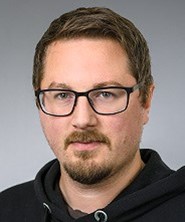
Markus Fjellström is a Postdoctoral Researcher at Stockholm University's Department of Archaeology and Classical Studies, working within the Faculty of Humanities. His research is centered on Sámi archaeology and utilizes advanced stable isotope analysis techniques to explore historical human-environment interactions in Northern Fennoscandia.
Dr. Fjellström's research interests focus on past human economies, pre-Christian and Christian societies through the study of food cultures, mobility patterns, and climate changes in Northern Fennoscandia and Sápmi from Late Iron Age to early historical period (ca. 900-1800 AD). His methodological expertise includes carbon, nitrogen, sulfur, and strontium stable isotope analysis, as well as elemental analysis. His work spans various contexts including glacial archaeology, reindeer domestication processes, and Sámi tax land systems.
His recent publications demonstrate a strong thematic focus on Sámi cultural practices, with particular attention to dietary patterns, human mobility, and ritual practices across historical periods. The research consistently employs interdisciplinary approaches combining archaeological evidence with scientific analysis to reconstruct past lifeways. A notable trend in his work is the examination of how colonial processes impacted Sámi communities, particularly through mining activities in northern Sweden.
Dr. Fjellström is actively involved in several significant research projects including the GLAS project (Archaeological surveys of melting glaciers and snow patches in Swedish Sápmi), funded by the Marcus and Amalia Wallenberg foundation (2020-2024); the Domestication by Action project at the University of Oulu (2020-2022), funded by ERC Starting Grant and Academy of Finland; and a project on Saami Tax land system in northern Sweden (2020-2024). He is also conducting a postdoctoral project at Lund University (2022-2024) in collaboration with the Archaeological Research Laboratory and Aarhus University.
His research collaborations extend to multiple institutions including Jamtli, Västerbotten, Norrbotten, Silvermuseet/INSARC, and Ájtte Mountain and Sámi museum, reflecting the interdisciplinary and international nature of his work on Sámi archaeology and cultural history.