معرفی
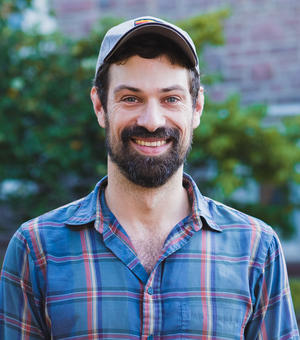
Trevor J. Orchard serves as a Departmental Lab Technician and Sessional Lecturer in the Anthropology Department at the University of Toronto. With a PhD from the University of Toronto (2007), he specializes in zooarchaeology and historical ecology, focusing on human-animal relationships in the Northwest Coast and Great Lakes regions of North America.
His educational background includes a PhD (2007, University of Toronto), MA, and BSc. His dissertation, "Otters and urchins: Continuity and change in Haida economy during the late Holocene and maritime fur trade periods," examined Haida economic adaptations through faunal and artifactual analyses from village sites in Haida Gwaii.
Dr. Orchard's research centers on archaeological and zooarchaeological method and theory, with specific expertise in the Archaeology of the Northwest Coast and Northeastern North America, and Environmental Archaeology and Historical Ecology. His work often employs stable isotope analysis, ancient DNA techniques, and meta-analysis of legacy collections to understand past human-environment interactions, particularly regarding extinct and endangered species like the passenger pigeon and Atlantic salmon.
His recent publications demonstrate a consistent focus on applying advanced analytical techniques to archaeological faunal remains, with particular attention to how historical ecological changes impact human subsistence strategies. His research shows increasing integration of multiple methodologies including GIS, stable isotope analysis, and ancient DNA to address complex questions about human-animal relationships throughout North American prehistory.
Dr. Orchard actively contributes to the academic community through conference organization, including the 22nd ICAZ Fish Remains Working Group meeting held in Toronto in 2024. He teaches courses such as ANT415H5S scheduled for Winter 2026 and maintains the Anthropology lab at UTM, where he manages collections and supports student research.
His research team focuses on (re-)analyzing legacy faunal collections to understand past subsistence patterns while contributing to larger multi-site research projects. Current projects include investigating the historical ecology of extinct and endangered species in southern Ontario, examining freshwater wetland impacts on sulfur isotope compositions, and analyzing long-term changes in Great Lakes nutrient cycles.