معرفی
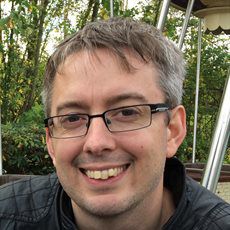
Dr Mark Ledger is a Senior Lecturer in Ecology at the School of Geography, Earth and Environmental Sciences, University of Birmingham. His research focuses on environmental change in freshwaters, particularly the impacts of climate change and extreme events such as droughts, floods, and heatwaves on aquatic ecosystems. He leads several NERC-funded research projects and supervises doctoral and postdoctoral researchers.
- Institution: University of Birmingham
- School: School of Geography, Earth and Environmental Sciences
- Position: Senior Lecturer in Ecology
- Email: m.e.ledger@bham.ac.uk
- Location: Edgbaston, Birmingham, B15 2TT, UK
Mark Ledger's research interests lie at the intersection of community ecology, biodiversity, and environmental change. His group employs empirical approaches across spatial and temporal scales—from laboratory microcosms to natural ecosystems—and has developed advanced mesocosm facilities for interdisciplinary water science research. Key areas include disturbance ecology, food webs, species interactions (especially plant-herbivore dynamics), and stressor effects on ecosystem function.
His recent publications reflect a strong focus on drought impacts, urban pond networks, and functional responses of aquatic communities. Themes across his work include the resilience of freshwater systems, the role of extreme events, and the integration of experimental and field-based methodologies.
Scientific Roles and Service:
- Director, Birmingham ECOLAB facility
- Programme Lead, Environmental Science
- Treasurer, Aquatic Ecology Group of the British Ecological Society
- Assessor, Australian Research Council
- Member, Natural Environment Research Council Peer Review College
- Associate Editor, Ecology and Evolution
- Guest Editor, Freshwater Biology special issue on Extreme Events in Running Waters
He is actively involved in teaching across undergraduate and postgraduate Geography and Environmental Science programs, covering topics such as river ecology, ecological systems, research methods, and fieldwork. He supports a team of doctoral researchers and collaborates with an international network of scientists.
His laboratory, the Birmingham ECOLAB, enables controlled experimental studies on freshwater systems, contributing to a mechanistic understanding of ecosystem responses to global change. This infrastructure supports interdisciplinary research in water science and environmental management.