معرفی
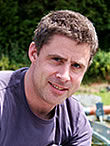
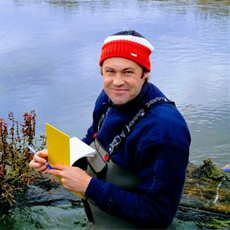
Kieran Khamis is a Lecturer in Physical Geography and Aquatic Ecology at the School of Geography, Earth and Environmental Sciences, University of Birmingham. He has been a member of the academic staff since 2021, following prior roles as a Research Fellow at the same institution.
Education:
- PhD in Alpine Hydro-ecology, University of Birmingham (2014)
- MSc in Conservation Biology, Manchester Metropolitan University (2007)
- BSc in Geography, Manchester Metropolitan University (2004)
His research focuses on freshwater ecosystems, particularly the impacts of global environmental change—such as climate change, land use change, and drought—on river ecosystems. He also investigates water quality and biogeochemistry in human-modified catchments, with emphasis on dissolved organic matter and nutrient dynamics. A key cross-cutting theme is method development using high-frequency environmental sensing and mesocosm-scale experimentation to improve monitoring and modeling of aquatic systems.
His recent publications span journals like Water Research, Water Resources Research, and Hydrology and Earth System Sciences, highlighting work in urban water quality, DOC dynamics, sensor innovation, and climate impacts on rivers. These studies reflect a strong trend toward integrating cutting-edge sensor technology with field-based ecological research to understand complex environmental systems.
Professional Memberships:
- British Ecological Society
- Freshwater Biological Association
- British Hydrological Society
Kieran teaches a range of undergraduate and postgraduate courses, including Global Challenges in the Anthropocene, River Ecology, and Catchment Processes. He is actively involved in supervision and welcomes projects related to environmental sensing in freshwater environments and ecosystem responses to environmental change. He has collaborated extensively with researchers such as Stefan Krause, David Hannah, and others on interdisciplinary environmental science projects.
He has no listed scientific awards in the provided text, but his research output and technological contributions (e.g., the Autobot-WQ sampler) suggest impactful work in environmental monitoring. He is not involved in major grant leadership roles in the text, but his collaborative publications indicate active participation in funded research initiatives.
Kieran’s work is closely tied to the Environmental Change Outdoor Laboratory (ECOLAB) and interdisciplinary water science research at Birmingham, contributing to both methodological innovation and ecological understanding in freshwater systems.
حوزههای پژوهشی