معرفی
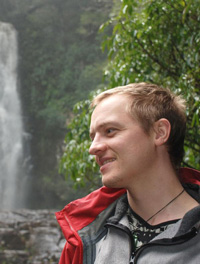
Magnus Lundgren serves as Director of the SciLifeLab Ancient DNA facility at Uppsala University's Department of Organismal Biology, where he holds the academic rank of Docent (Associate Professor). His role involves providing ancient DNA analysis services to researchers globally, bridging historical inquiry with molecular techniques to explore human evolution and ecological changes.
Lundgren's research spans microbiology, biotechnology, and ancient DNA analysis. Initially focused on thermophilic microorganisms and CRISPR-Cas systems in archaea, his work evolved toward developing ancient DNA methodologies. Current projects analyze historical societies through genetic evidence, resolving kinship questions and tracing ecological shifts over time. His dual expertise in microbial genetics and historical genomics enables innovative cross-disciplinary applications.
Publication trends reveal a strategic shift from fundamental archaeal cell cycle studies (2004-2010) to applied ancient DNA work (2017-2023), with CRISPR technology serving as a consistent thread. Early papers in Cell and PNAS established his expertise in DNA replication, while recent work applies these principles to archaeological samples and historical kinship resolution.
No scientific awards were explicitly mentioned in the source text.
Through the SciLifeLab facility, Lundgren mentors researchers and supports collaborative projects across Sweden and internationally. The facility provides critical infrastructure for ancient DNA studies, though specific grant details weren't provided. His leadership enables diverse research in evolutionary biology and archaeology.
The SciLifeLab Ancient DNA facility operates as a national resource under Lundgren's direction, offering specialized analysis services for archaeological and historical samples. This infrastructure supports interdisciplinary teams studying human migration patterns, historical epidemics, and ecological adaptations through time-resolved genetic data.