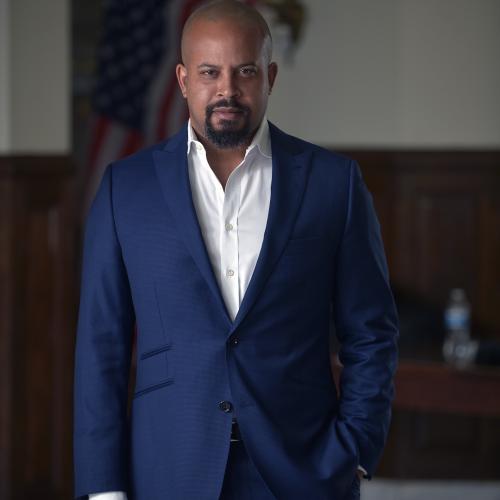
معرفی
Lucius T. Outlaw III serves as Associate Professor of Law and Director of the Clinical Law Center at Howard University School of Law, where he teaches criminal law and justice courses while supervising the Criminal Justice Clinic. His career spans federal public defense, Senate counsel work, and private practice at elite law firms including Mayer Brown LLP where he became partner.
His educational foundation includes:
- Bachelor of Arts from Wesleyan University (1993)
- Master of Arts from The George Washington University - Graduate School of Political Management (1996)
- Juris Doctor from University of Pennsylvania Carey Law School (2001)
Professor Outlaw's research critically examines systemic inequities in criminal procedure, with emphasis on Fourth Amendment violations in racially targeted policing, the conflation of drug and violent offenses in federal sentencing, and the constitutional implications of acquitted conduct sentencing. His work connects legal doctrine to real-world impacts on marginalized communities through empirical analysis of case law and policing practices.
His scholarly output demonstrates consistent focus on decarceration strategies and racial justice reform, particularly analyzing how Supreme Court decisions like Utah v. Strieff enable dragnet surveillance in Black communities and how federal sentencing guidelines perpetuate the war on drugs through violent offense equivalencies.
No scientific awards were documented in the source materials.
As supervising attorney of the Criminal Justice Clinic, Professor Outlaw mentors law students representing indigent clients in D.C. Superior Court misdemeanor cases. His prior eight-year tenure as Assistant Federal Public Defender included service as Senior Litigation Counsel managing office-wide caseload strategy, attorney training, and policy implementation, plus a Senate Judiciary Committee detail under Senator Durbin.
He directs Howard's Clinical Law Center which operates the Criminal Justice Clinic and other experiential programs, integrating theory with practice through direct client representation in underserved communities.