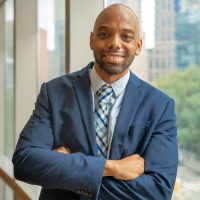
Jared M. Trujillo is an Associate Professor of Law at the CUNY School of Law. He teaches Constitutional Law, legal writing, and courses focused on the criminal and juvenile legal systems. Previously, he served as Senior Policy Counsel at the New York Civil Liberties Union, President of the Association of Legal Aid Attorneys, and as a criminal defense attorney at the Legal Aid Society NYC. He also taught as an adjunct professor at Hofstra University School of Law from 2016 through 2021. CUNY School of Law - Associate Professor New York Civil Liberties Union - Senior Policy Counsel Legal Aid Society NYC - Juvenile Defense Attorney Hofstra University School of Law - Adjunct Professor His research and advocacy focus on sentencing reform , bail policy , solitary confinement , policing of LGBTQ+ communities , Communications Decency Act Section 230 , foster care , and decriminalization of sex work . His publications analyze legislative impacts, systemic inequalities, and policy advocacy within criminal and juvenile legal systems. Jared's recent law review article on sentencing reform (2023) explores multigenerational poverty reduction through legal system changes. His 2022-2023 essays address solitary confinement ethics, policing reform, and bail system critiques, reflecting ongoing engagement with media and policy debates.
Susan Fino is a Professor at the College of Liberal Arts and Sciences, Wayne State University. Her research focuses on public law, American constitutional law, administrative law, and the role of state supreme courts. She holds a B.A. from Johns Hopkins University, an M.A. and Ph.D. from Rutgers University. She has received the President's Award for Excellence in Teaching. Her courses include American Government (PS1010) and Constitutional Law (PS5110/PS5120), taught across multiple terms from 2023 to 2025. Dr. Fino's research explores judicial federalism, state constitutional frameworks, and legal interpretations of rights. Her work analyzes topics like church-state relations, taxation provisions in state constitutions, and assisted suicide debates. She has written extensively on state supreme court dynamics, including landmark cases and institutional performance metrics. Her scholarship bridges legal theory with practical governance challenges at both state and federal levels. Her publications span over three decades, addressing evolving legal landscapes such as the Rehnquist Court’s federalism approach and technological impacts on criminal sentencing. She consistently engages with issues at the intersection of law, politics, and societal values.
Sakari Melander is a Professor at the Faculty of Law , University of Helsinki, specializing in Criminal Law , with a focus on constitutionalization, Europeanization, and sentencing policies. His work bridges theoretical criminal law with practical legislative and policy challenges. Key research areas include EU criminal law, constitutional constraints on criminal legislation, and general doctrines of criminal law. He has extensive experience in parliamentary legal consultation, providing expert opinions to Finland’s Legislative Committees (e.g., on immigration control, anti-corruption directives, and digital evidence handling). Recent publications address topics like EU corporate sanction policies, constitutionalization of criminal law, and reforms in Finnish sentencing systems. His 2025 article in the New Journal of European Criminal Law explores balancing administrative and criminal sanctions in the EU. Scientific awards include: Hilkka ja Otto Brusiin Foundation Thesis Prize (2001) Magister Bonus – Good Teacher Award (2014) Primustohtori Award (2010) Year’s Teacher (2010) Year’s Opponent (2008) He leads research projects such as Criminal Law Under Pressure: Differentiation and Harmonization (2012-2015) and Assessment of Human Trafficking Sanction Practices (2021-2022), and supervises doctoral theses on criminal law topics.
Stephen Billings is an Associate Professor of Finance at the Leeds School of Business, University of Colorado Boulder, where he holds the Global Real Estate Capital Markets Chair position. He serves as the faculty director of the MS in Real Estate program and research director for the CU Real Estate Center. His work spans multiple research centers including the Center for Research on Consumer Financial Decision Making and the Michael A. Klump Center for Real Estate. Billings received his PhD in Economics from the University of Colorado, a MS in urban planning from the University of North Carolina, and a BS in economics from Georgetown University. Prior to joining CU Boulder in 2016, he was faculty at the University of North Carolina Charlotte with appointments in both economics and public policy, where he also served as faculty director for the real estate center. His research focuses on the intersection of housing, schools, neighborhoods and crime, addressing critical policy issues including the impact of public investment in light-rail transit on neighborhoods, school segregation's influence on academic achievement and crime, neighborhood gentrification causes, lead-based paint in low-income housing, and the effects of sea level rise and natural disasters on neighborhood sorting and household finances. Billings employs sophisticated analysis of large micro-datasets with studies based on data and policies in Charlotte, NC and Denver, CO. His work connects urban economics with public policy, demonstrating how neighborhood environments shape individual outcomes across multiple dimensions. Billings' recent publication record demonstrates a consistent focus on neighborhood effects, school choice impacts, crime economics, and housing market dynamics. His work frequently examines the intersection of race, housing, and economic outcomes, with particular attention to policy implications. He has developed innovative methodological approaches to studying residential amenities and neighborhood spillovers, with increasing attention to climate change impacts on housing markets. His research appears in top journals including The Quarterly Journal of Economics, American Economic Review: Insights, and Journal of Urban Economics. As an educator, Billings teaches undergraduate and masters classes in real estate finance and economics, as well as doctoral and masters level courses on cost-benefit analysis and statistical methods. He has extensive consulting experience conducting economic impact studies, including assessments of North Carolina's public higher education system, affordable housing needs in Colorado communities, and the economic effects of marijuana legalization on property markets. His practical policy work complements his academic research, creating a bridge between theoretical insights and real-world applications. Billings leads significant research initiatives through the CU Real Estate Center, where he directs studies examining the impact of business improvement districts and other urban development policies. His work bridges academic research with practical policy applications, making substantial contributions to our understanding of how housing, education, and neighborhood environments shape individual outcomes and community development. His December 2023 memo on the HUD Officer Next Door Program exemplifies his engagement with current housing policy issues.
Patrick Metze is Professor of Law at Texas Tech University School of Law, where he has served since 2008. He initially joined as an adjunct professor teaching the criminal defense clinic in 2007 and became a full-time Associate Professor of Law and Director of the Criminal Defense Clinics in May 2008. He was promoted to Professor of Law with tenure in September 2012. Professor Metze has established several groundbreaking clinical programs including the Capital Punishment Clinic (2010), the Caprock Regional Public Defender Office and Clinic (2010) - the first full-time public defender office operated from within a law school, and the Texas Tech School of Law Innocence Clinic (2016). Professor Metze earned his B.A. from Texas Tech University in 1970 and his J.D. from the University of Houston in 1973. Before joining academia, he maintained a private law practice in Levelland and Lubbock, Texas for over 30 years, initially handling general practice including banking, collections, corporate law, and oil and gas matters, but shifting focus to criminal and family law following the 1986 oil industry collapse in West Texas. He was one of only 14 attorneys qualified for appointment as first chair in Capital Murder cases in the 9th Administrative Judicial Region. Professor Metze's research focuses on criminal law and procedure, with particular emphasis on capital punishment, innocence projects, and the school-to-prison pipeline. His publications reveal a consistent concern with constitutional protections, ethical obligations of courts and practitioners, and systemic reforms in criminal justice. His work spans both theoretical analysis of legal principles and practical guidance for criminal defense attorneys. Among his professional recognitions, Professor Metze is a Life Fellow of The Texas Bar Foundation and maintains membership in The Pro Bono College of the State of Texas. His presentations at numerous professional seminars demonstrate his active engagement with the criminal defense bar and commitment to advancing legal practice. Professor Metze has served on various committees including the Criminal Justice Council of the State Bar of Texas, the Advisory Committee to the Lubbock Special Needs Defenders Office, and as a former board member of the Lubbock Criminal Defense Lawyers Association (where he served as President) and the Texas Criminal Defense Lawyers Association.
Elliott Ash is an Associate Professor of Law, Economics, and Data Science at ETH Zurich's Center for Law & Economics. He holds a Ph.D. in Economics and J.D. from Columbia University, a B.A. in Economics, Government, and Philosophy from the University of Texas at Austin, and an LL.M. in International Criminal Law from the University of Amsterdam. His research focuses on empirical legal studies using econometrics, NLP, and ML, examining topics like judicial behavior, legislative impact, and AI-driven governance. He has been funded by the ERC, Swiss NSF, and others. Research Interests: Elliott explores automation of legal decisions, text-as-data analysis in law, and the intersection of AI with legal systems. He develops tools like BallotBot and LePaRD to enhance legal transparency and public understanding. His work bridges law, economics, and computer science, with publications in top journals like the American Economic Journal and Review of Economics and Statistics . Teaching: Courses include Building a Robot Judge , Natural Language Processing for Law , and Big Data for Public Policy . He co-organizes the Zurich Workshop in AI+Economics and Monash-Warwick-Zurich Text-as-Data Workshops. Awards: European Research Council Starting Grant, Swiss National Science Foundation Grant, and multiple grants from U.S. and Swiss institutions. His work has been featured in NPR , VoxEU , and Georgetown Law Journal . Labs/Teams: Leads the Swiss AI Initiative's Human-AI Alignment team, collaborates with the CEPR on Political Economy research, and serves as an Economic Journal Associate Editor.
Maria Fitzpatrick is Professor in Cornell University's Department of Policy Analysis and Management and Director of the Cornell Institute for Public Affairs. A Research Associate at the National Bureau of Economic Research, she holds a Ph.D. from the University of Virginia (2008) and specializes in child/family policy and education economics. Research examines early childhood education impacts, teacher compensation and retirement systems, child maltreatment reporting, and incarceration effects on families. Notable studies analyze universal pre-kindergarten programs, teacher pension reforms, and maternal incarceration's impact on birth outcomes. Current projects investigate child welfare decision-making algorithms and prison visitation policies. Fellowships include the Henry Luce Foundation/ACLS Early Career Fellowship and postdoctoral positions at Stanford's Institute for Economic Policy Research. She has advised government agencies including the Australian Prudential Regulation Authority and Queensland Rail.
Dr. Steven Kemp is a Senior Lecturer in the Department of Public Law at the University of Girona, Spain. His research focuses on the intersection of criminal law, cybercrime, and criminological analysis, with affiliations to institutions like UNICRI, Open University of Catalonia, and the Institute of Public Security of Catalonia. His work spans digital security, fraud victimization, and sentencing disparities. Current roles: Serra Hunter Fellow, University of Girona (2023–present); Collaborating Teacher, UNICRI (2024–present) Previous roles: Associate Professor, University of Girona (2015–2021); Postdoctoral Researcher, Pompeu Fabra University (2021–2023) and University of Manchester (2021) His research interests include: Cybercrime dynamics during global crises (e.g., pandemic-related fraud trends) Victimization patterns in digital societies, particularly among older adults Legal implications of smart technologies and cybersecurity frameworks Comparative criminal justice systems, especially plea bargaining and sentencing disparities Key trends in his recent publications (2025–2019) highlight: Rising cyberfraud incidents and their societal impacts Interdisciplinary approaches to digital security and legal systems Statistical modeling of crime trends post-COVID-19 Behavioral responses to cybercrime risks Scientific recognition includes: Serra Hunter Fellow He actively collaborates with research groups like the Research Group in the Seminar of Criminal and Criminological Sciences and contributes to public policy initiatives in cybersecurity and fraud prevention.
Eyal Aharoni is a Professor in the Department of Philosophy at Georgia State University's College of Arts & Sciences. He holds a Ph.D. in Psychology from the University of California, Santa Barbara (2009) and bachelor's degrees in psychology and religious studies from the same institution. Dr. Aharoni's research program bridges psychology, neuroscience, and legal studies with particular focus on: Risk models for antisocial behavior Application of neuroscience to legal contexts (neurolaw) Impact of emotion and cognitive bias on criminal, moral, legal, and political decision making Psychopathy and criminal justice outcomes His scholarly work demonstrates a consistent interdisciplinary approach to understanding the psychological and neurobiological underpinnings of criminal behavior and legal decision-making. Through experimental, longitudinal, and neuroimaging methodologies, Aharoni investigates how cognitive, behavioral, evolutionary, and neurobiological factors influence criminal justice outcomes and potential reforms. Dr. Aharoni maintains an active research laboratory and welcomes PhD students in psychology, with potential funding opportunities in neuroethics. His current research interests include ethical implications of neuroscience technologies and associated issues in cognitive neuroscience, moral psychology, legal psychology, and forensic psychology. His professional experience includes: Research Associate at the RAND Corporation Postdoctoral fellowship at The MIND Research Network for Neurodiagnostic Discovery and the University of New Mexico Psychology Research positions at the Research Center for Virtual Environments and Behavior Research positions at the Institute for Social, Behavioral, and Economic Research
Professor David Nelken is a distinguished academic in the field of law and legal studies, currently serving as Professor of Comparative and Transnational Law at the Dickson Poon School of Law, King's College London. He previously held positions at prestigious institutions including the University of Cambridge, University College London, and the University of Macerata (Italy) as a Distinguished Professor. His academic career includes roles as Distinguished Research Professor at Cardiff University (1995–2013) and Visiting Professor of Criminology at the University of Oxford (2010–2014). Professor Nelken's research focuses on comparative sociology of law, criminology, and legal/social theory. He has made significant contributions to understanding global social indicators, juvenile justice, white-collar crime, and international criminal justice. His work emphasizes interdisciplinary approaches, combining theoretical inquiry with empirical research. His notable awards include the American Sociological Association Distinguished Scholar Award (1985), Sellin-Glueck International Award (2009), and Fellowships from the British Academy (2023) and the Academy of Social Sciences (2009). He has served on editorial boards of leading journals and contributed to global legal governance initiatives, including the SCOPUS Database evaluation committee. Professor Nelken has advised on criminal justice systems globally, including roles in Scotland’s Children’s Hearings and Italian Regional Crime Committees. He is actively involved in PhD supervision, having been awarded supervisory excellence in multiple years. His teaching spans Jurisprudence, Law & Social Theory, and Sociology of Law at both undergraduate and postgraduate levels.
Michael Morse is an Assistant Professor of Law at the University of Pennsylvania Carey Law School, with a secondary appointment in the Political Science Department. He holds a JD from Yale Law School and a PhD in Political Science from Harvard University. Prior to his current position, he was a Bigelow Fellow at the University of Chicago Law School and served as a law clerk for federal judges in Alabama and California. Morse specializes in voting rights, election administration, and criminal justice system reform, combining empirical methods with legal scholarship to address issues such as felony disenfranchisement, voter ID laws, and election integrity. His research has been published in top journals including the California Law Review , American Political Science Review , and Science Advances . Notable contributions include analyses of Florida’s Amendment 4, voter registration coordination via the Electronic Registration Information Center (ERIC), and studies on ballot design impacts. He has also written extensively on the election of local prosecutors and the role of fines/fees in criminal justice. Morse’s work frequently bridges legal and political science disciplines, emphasizing data-driven approaches to electoral systems. His recent focus on ‘lost votes by mail’ and privacy in election results underscores his commitment to advancing equitable and transparent electoral practices. He has been cited in media outlets like Slate , Vox , and NBC News for his accessible explanations of complex election-related issues. Scientific Recognition: Morse was recognized as a Bigelow Fellow at the University of Chicago Law School, a prestigious postdoctoral position supporting legal research.
Angela Crow is an Associate Professor at James Madison University (JMU) in the School of Writing, Rhetoric and Technical Communication, where she has served since 2012. Her research bridges literacy studies, design, and urban mobility, focusing on how communities advocate for car-free infrastructure and equitable public spaces. She explores the role of digital communication in fostering feminist interventions, particularly around cycling advocacy and street design. Her work intersects with gender studies, urban studies, and rhetorical theory. Educated at the University of Kansas (Ph.D., 1997) and Point Loma College (B.A., 1987), she has authored books on writing programs and composition studies, including Aging Literacies (2006) and Field of Dreams (2002). Recent publications analyze surveillance, privacy in digital contexts, and transportation equity. Her research often highlights marginalized voices in shaping public discourse. Research Interests: Her current projects examine embodied literacies in mobility advocacy, social media practices of grassroots movements, and the rhetoric of urban infrastructure. She critiques car-centric planning through feminist and critical frameworks, emphasizing accessibility and safety for non-car users. Her work also addresses aging populations’ digital literacies and the intersection of technology with social inequality. Publications: Her articles span rhetorical analysis of social movements, educational assessment frameworks, and the sociotechnical dimensions of writing. Recent trends include collaborations on privacy in big data and participatory design for community mobility.
Nicole Myers is an Associate Professor and Graduate Coordinator in the Department of Sociology at Queen's University, Canada. She holds a PhD and MA from the University of Toronto and a BA from the University of Guelph. Her research focuses on criminology, particularly pre-trial detention, bail processes, and systemic discrimination within the criminal justice system. She critiques current practices such as excessive bail conditions, institutional risk aversion, and the erosion of the presumption of innocence. Her work examines bail court dynamics, including adjournment cultures, systemic overreach in conditions (e.g., banning ordinary locations), and the impact on marginalized groups. Recent studies highlight crises in Canada’s bail system, including deepening detention rates and Manitoba’s discriminatory practices. Myers emphasizes reform needs through policy analysis and empirical studies. Publications span 2009–2024, analyzing bail’s role as punishment, surety supervision roles, and youth justice. Her research bridges legal sociology and criminology, aiming to improve judicial practices and reduce pre-trial detention inequities.
Prof. Dr. Elisa Marie Hoven is a professor at the Faculty of Law, University of Leipzig, specializing in German and foreign criminal law, criminal procedural law, and commercial/media criminal law. She works at Burgstraße 21, Room 1.10, Leipzig. Education: Law at Free University Berlin, Radboud University Nijmegen, and University of Cambridge Professional Background: Legal clerkship in Berlin and at the International Criminal Court; visiting roles at Berkeley, Harvard, Sydney, and others Her research focuses on: Corporate criminal law (particularly corporate sanctions) Media criminal law and digitalization (hate speech) Sentencing law reform Anti-doping legislation Animal welfare criminal law Current third-party funded projects: "Gerechte Strafzumessung" (DFG-funded, analyzing sentencing practices and proposing reforms) "Hate Speech im Internet" (funded by German Federal Ministry of Justice, interdisciplinary collaboration with media studies and sociology) Scientific awards: Habilitation award from the University of Erlangen-Nuremberg Dissertation prize from the Free University of Berlin She leads the "Legal Lab Hate Speech" and founded the national Moot Court Strafrecht. Her work spans legal education, empirical research, and public science communication.
Nessa Lynch holds the Matheson Lectureship in Law, Innovation, and Technology at University College Cork, Ireland. Previously, she served as an Associate Professor (2019–2022) and Senior Lecturer (2013–2019) at Victoria University of Wellington, New Zealand. She also held roles as a Research Fellow and adjunct faculty there. Her research focuses on emerging technologies in law enforcement, youth justice, and children’s rights. Lynch advises governmental bodies, including New Zealand Police and the Data Ethics Advisory Group, on issues like facial recognition technology and biometric ethics. She has authored multiple books, including Youth Justice in New Zealand (3rd ed., 2019) and edited volumes on global youth justice trends. Her honors include the Engagement Excellent Award (2017) and Early Career Research Excellence Award (2014). Lynch is actively involved in policy reforms, including submissions on digital justice, pandemic law, and sentencing practices for youth offenders. Education: BCL (Law), University College Cork, 2003 LLM (Law), University College Cork, 2004 PhD (Law), University of Otago, 2009 Research Interests: Technology and law enforcement ethics Youth justice policy reforms Children’s rights in criminal proceedings Biometric surveillance regulation Recent Grants: Technology-Enabled Surveillance (2024–2026) Young Adults in the Criminal Justice System (2021–2022) Facial Recognition Technology Framework (2019–2020) Key Contributions: Policy Briefs on digital justice and facial recognition Expert testimony on policing ethics and sentencing Leadership roles in New Zealand’s Data Ethics Advisory Group and Policing Authorities Awards: Engagement Excellent Award, Victoria University of Wellington (2017) Early Career Research Excellence Award, Victoria University of Wellington (2014) Labs/Teams: Leading UCC’s interdisciplinary research on law-technology intersections Collaborations with global institutions like Terre des Hommes and the EU on child rights