معرفی
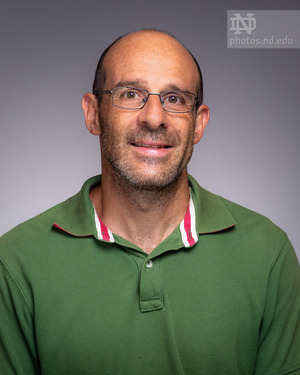
Luca Grillo is the Department Chair and Professor of Classics at the University of Notre Dame, College of Arts and Letters. He holds a PhD from Princeton University (2008) and has held academic positions at Amherst College and the University of North Carolina at Chapel Hill. His research focuses on Latin prose historiography, Roman rhetoric, and numismatics, with key publications analyzing Caesar’s literary techniques and Cicero’s political speeches. Grillo has received prestigious awards including the Princeton Teaching Award and Woodrow Wilson Foundation recognition. He teaches courses on ancient literature, Roman history, and rhetoric, and has organized conferences on topics like 'Rhetoric and Historiography.' His current projects include studies on irony in Latin literature and ancient economic practices. Grillo actively engages in public outreach, including lectures at schools and collaborations with museums. He serves on editorial boards for journals like the American Journal of Philology and chairs committees for academic programs at Notre Dame.
Education
- PhD in Classics, Princeton University (2008)
- MA in Classical and Near Eastern Studies, University of Minnesota (2003)
- B.A. in Literature and Philosophy, Università Cattolica, Milan (1995)
Research Interests
Grillo’s work bridges literary analysis and historical context, emphasizing narrative strategies in Roman historiography. He explores themes like political rhetoric, irony in classical texts, and the intersection of literature with social and economic history. His book How to Make Money examines ancient economic practices through a classical lens, while his commentary on Cicero’s De Provinciis Consularibus offers juridical and rhetorical insights. He collaborates internationally, co-editing the Cambridge Companion to the Writings of Julius Caesar and contributing to projects on Sallust and Apuleius.
Recent Publications & Trends
Recent works highlight interdisciplinary approaches, such as linking ancient medical terminology to modern science (In Fimo) and examining cognitive theories in classical rhetoric (Rhetorica ad Herennium). His articles frequently address narrative closure, political reconciliation, and intertextual connections in Caesar’s writings.
Awards & Grants
- 2024: Religion, Power, Democracy Grant ($16,700)
- 2022: Rhetoric and Historiography Conference Grant ($15,000)
- 2018: ND Center for Social Concern Grant (Aequora Program)
Teaching & Service
Grillo teaches advanced Latin literature courses and directs the Moreau Seminar. He advises initiatives like Aequora, promoting Latin education in underserved schools. His service roles include editorial positions, tenure review committees, and leadership in professional associations like the APA. He also organizes conferences such as Rhetoric and Historiography: New Perspectives (2023).
Labs/Teams
He collaborates with interdisciplinary teams on projects like Roman Imperialism (Odense, Denmark) and co-leads the Paideia Institute Caesar in Gaul Summer School with Christopher Krebs.