معرفی
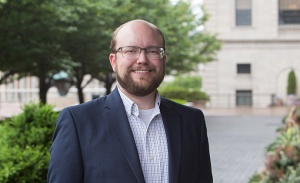
Lincoln A. Mullen is an Associate Professor in the Department of History and Art History at George Mason University's College of Humanities and Social Sciences, where he also serves as Executive Director of the Roy Rosenzweig Center for History and New Media (RRCHNM). A specialist in American religious history and 19th-century U.S. history, Mullen is known for pioneering computational approaches to historical research, particularly in text analysis and historical mapping.
His research interests focus on American religious history, digital history methodologies, and 19th-century U.S. history, with particular emphasis on religious conversion, biblical usage in American public life, and the development of religious ecologies. Mullen approaches these topics through innovative computational methods, creating digital tools and platforms that make historical research more accessible and rigorous.
Mullen's scholarly output shows a clear trajectory toward increasingly sophisticated digital methods, with his most recent work representing a seamless integration of traditional historical scholarship and computational analysis. His publications span monographs, journal articles, digital projects, and open-source software, reflecting his commitment to diverse forms of scholarly communication.
- 2018 Best First Book in the History of Religions prize from the American Academy of Religion
- Chronicling America Data Challenge from the National Endowment for Humanities (2016)
Mullen has secured over $2.8 million in external funding as PI or co-PI from prestigious sources including NEH, Mellon Foundation, and Library of Congress. His leadership of RRCHNM provides numerous opportunities for student collaboration on digital history projects. Mullen supervises doctoral students in both traditional historical topics and digital methodology, emphasizing the importance of argument-driven digital scholarship that serves historical questions rather than merely showcasing technical prowess.
As director of RRCHNM, Mullen leads one of the most influential digital history centers in the United States, which develops websites, podcasts, educational resources, and data-driven historical projects with a commitment to open access and public engagement.