معرفی
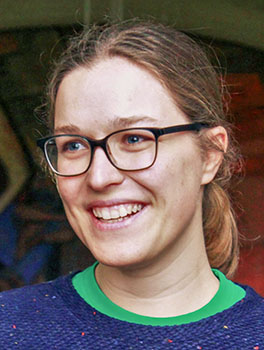
Dr. Lieveke van Vugt is a Postdoc researcher at the University of Bern's Institute of Plant Sciences, specializing in Paleogenomics & Vegetation Modelling. Her work focuses on reconstructing Holocene environmental changes, particularly the interplay between climate, vegetation, and human land use in Mediterranean and alpine regions. She employs multidisciplinary methods including pollen analysis, sediment DNA, and archaeological data to trace ecological transitions linked to prehistoric agricultural expansion and societal impacts.
Key research interests include the coexistence of Fagus and Quercus forests under climatic extremes, the role of wild/domesticated animals in shaping alpine biodiversity, and the drivers of synchronous forest declines in northern Greece during the Early Holocene. Her studies often bridge paleoecology with archaeological inquiries, emphasizing long-term human-environment feedback mechanisms.
Her recent work highlights the climatic drivers behind vegetation shifts at the onset of European farming and reveals comparable land-use patterns across southern and central Europe during the Neolithic. Methodologically, she advances high-resolution palaeoecological records from lacustrine sediments, integrating genetic and macrofossil evidence for comprehensive ecological reconstructions.