معرفی
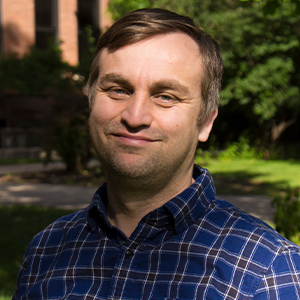
Li Xiaofeng serves as Professor and graduate tutor at Tongji University's School of Art and Media, where he has taught since 2007 following doctoral studies in Communication. His academic trajectory progressed from Lecturer (2007-2010) to Associate Professor (2010-2016) before attaining full Professorship, complemented by a 2012-2013 visiting scholarship at NYU's Tisch School of the Arts.
His educational foundation includes:
- Bachelor's in Chinese Language and Literature, East China Normal University (1992-1996)
- Master's in Art, Beijing Normal University (2000-2003)
- Ph.D. in Communication, East China Normal University (2004-2007)
Professor Li's research centers on documentary creation and theory with three interconnected pillars: Chinese documentary practices (examining production ecologies and cultural identity), the adaptation of Western concepts like 'Direct Cinema' within Chinese contexts, and pioneering work on interactive documentaries. His scholarship consistently addresses ethical dimensions, stylistic innovations, and new media's transformative impact on documentary forms, revealing a distinctive focus on bridging theoretical frameworks with creative practice.
Analysis of his 15 most recent publications shows evolving engagement with documentary theory: early works established foundations in 'Direct Cinema' ethics (2006-2012), mid-career research expanded to Chinese documentary ecosystems (2012-2016), while recent scholarship pioneers interactive documentary theory through post-structuralist lenses (2019-2021), demonstrating remarkable continuity in core themes alongside methodological innovation.
His scholarly recognition includes:
- 2022: China University Film and Television Association Survey Report Category Second Prize
- 2019: Association's Textbook Category First Prize
- 2014: Association's Excellent Book Award
- 2010: Shanghai Academic Conference Outstanding Paper Award
- 2003: China TV Golden Eagle Award for Paper Third Prize
As an educator, Professor Li has supervised graduate students while teaching foundational undergraduate courses including 'Documentary Fundamentals' and 'Documentary Creation,' alongside advanced graduate seminars in 'Film Language Research' and 'Documentary Creativity and Production.' His research leadership includes presiding over one national philosophy and social science art project plus a sub-project of a major national philosophy and social science initiative, securing substantial funding for documentary studies in China.
His creative work operates within the school's Media Experiment and Practice Teaching Center and Omnimedia Research Institute infrastructure, where his documentary productions serve as both artistic contributions and pedagogical tools for students exploring media creation.