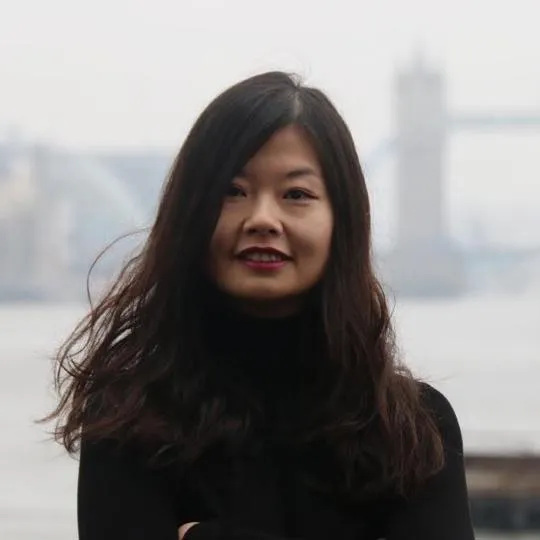
معرفی
Wang Dongdong is a Professor and doctoral supervisor at Tongji University's School of Art and Media, serving on the University Academic Affairs Committee and holding leadership roles in national academic societies including the Chinese Sociological Association and Chinese Society of Journalism History. His extensive career bridges academic scholarship with award-winning creative practice in documentary filmmaking and television production.
His educational background spans engineering, management, and media:
- Bachelor of Engineering in Automatic Control from Harbin Institute of Technology (1993)
- Master of Management from Northeast Forestry University (2000)
- PhD in Technological Economics and Management from Harbin Institute of Technology (2008)
Wang's research focuses on urban-rural communication dynamics, integrated media production, and documentary film theory. His work examines how digital convergence reshapes media practices, with particular attention to city branding, documentary ethics, and the poetics of cinematic expression. He investigates the intersection of traditional Chinese cultural forms with contemporary media technologies, exploring how new narrative frameworks emerge in networked societies.
Analysis of his recent publications reveals strong thematic continuity in media convergence research, with evolving emphasis from technical production aspects (2016-2017) toward sociocultural implications (2018-2019). His work consistently bridges film theory, urban studies, and communication practice, demonstrating how media forms mediate social relationships in Chinese contexts.
His scientific recognition includes:
- Third National Top 100 Advanced Individuals in Radio and Television Theory (2010)
- 11th National Radio and Television Academic Paper Award Second Prize (2010)
Wang has supervised over 40 award-winning student projects that have earned international recognition at festivals including Berlin, Amsterdam, and Toronto. His research portfolio includes 19 major grants from national and municipal sources, notably leading the National Radio and Television Administration's 'Belt and Road Cross-Cultural Communication Strategy' project and Shanghai's 'Cultural Brand Core Identity' initiative. He directs the Documentary Creation Teaching Team and develops curriculum through Tongji's Media Experiment and Practice Teaching Center.
He actively shapes media education policy as Executive Director of Shanghai's Arts Master's Teaching Steering Committee and leads the 'All-Media Research Institute' focusing on urban cultural communication strategies. His work integrates creative practice with academic research through the 'Lifestyle Research Committee' examining contemporary Chinese social transformations.