معرفی
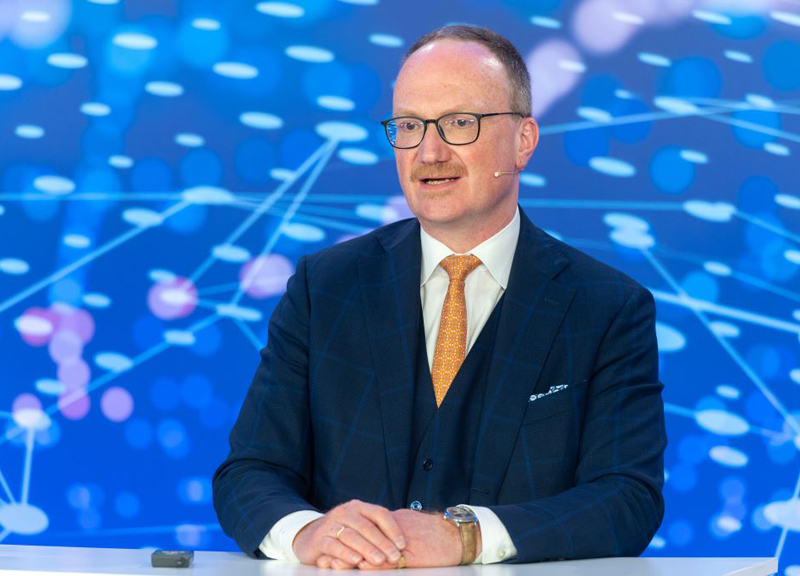
Lars P. Feld is a University Professor (W3) of Economics, particularly Economic Policy and Economics of Order, at Albert-Ludwigs-University of Freiburg since 2010, and serves as Director of the Walter Eucken Institute. He previously held professorships at the University of Heidelberg (2006-2010) and University of Marburg (2002-2006), and has been a Visiting Professor at the Centre for European Economic Research (ZEW) Mannheim since 2007.
His research focuses on federalism, political economics, public finance, social security, and public sector economics. Feld's work bridges theoretical economic concepts with practical policy applications, particularly in constitutional economics and the economic analysis of law. His scholarship has established him as a leading voice in German economic policy debates.
Feld has received numerous prestigious awards including an honorary doctorate from the University of Lucerne (2017) and recognition as Germany's most influential economist in the Frankfurter Allgemeine Zeitung ranking (2013). He has been consistently ranked among Germany's top ten economists since 2013.
- Entry in the Golden Book of Hildesheim (2018)
- Honorary doctorate from University of Lucerne (2017)
- First Rector's Fellowship at FRIAS (2014)
- Top-ranked German economist (2013)
- Best Paper Award of T-H-E Christmas Workshop (2012)
- Full member of Leopoldina (since 2008)
Feld has served in significant advisory roles including as a member of the Scientific Advisors to the Federal Ministry of Finance (since 2003), expert to the Federalism Commission II (2007), and member of the German Council of Economic Experts (2011-2021), where he served as chairman in his final year. He has also been a member of the advisory board of the German stability council (2013-2021) and the Minimum Wage Commission (since 2020).
As Director of the Walter Eucken Institute, Feld leads research activities focused on economic order and policy. He is also a member of the Kronberger Kreis scientific council and the Mont Pelerin Society, reflecting his engagement with classical liberal economic thought.