معرفی
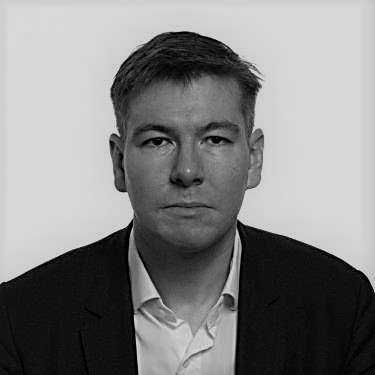
Kyle Murray is a Lecturer in Law at the City Law School, City St George's, University of London, where he teaches foundational and advanced courses including Foundations of Criminal Law and Administrative Law & Human Rights. He previously held Teaching Fellowships at Durham Law School, covering Public Law, Human Rights, Criminal Law, and Media Law.
His educational background includes:
- PhD in Law, Durham University (2014–2020)
- Master of Jurisprudence (MJur), Durham University (2013–2015)
- LLB (Hons), Durham University (2010–2013)
Kyle's research centers on criminal law, particularly sexual offences involving deception and consent, constitutional theory, and moral philosophy. He investigates which deceptions can legally negate consent, with a focus on issues like gender misrepresentation and contraceptive sabotage. His work emphasizes sexual autonomy and the moral foundations of legal rules. He has expanded this to examine how pregnancy resulting from deceit intersects with bodily harm offences.
His publications appear in leading journals such as the Criminal Law Review and Canadian Journal of Law & Jurisprudence. The research trends reflect deep engagement with legal doctrine, ethical reasoning, and policy impact, particularly in areas where law intersects with identity, gender, and bodily integrity.
Kyle's scholarly influence extends beyond academia. He has been cited by the Crown Prosecution Service in updating sexual offence prosecution guidance and by the UK Parliament’s Joint Committee on Human Rights. He has also contributed media commentary on high-profile consent cases in outlets like Refinery29 and Restlesss Network.
He is an Associate Fellow of the Higher Education Academy and has extensive teaching experience across UK Constitutional Law, Human Rights, Jurisprudence, and Media Law. While no formal students or awards are listed, his advisory role is implied through supervision in research and teaching. He has played key roles as module leader and contributor to legal education reform, particularly in alignment with the new SQE framework. There is no mention of laboratory or research team affiliations.