معرفی
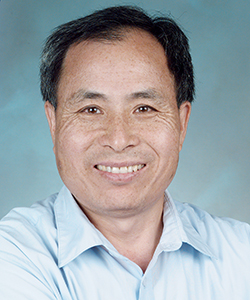
Dr. Kwang Poo Chang is a Professor of Microbiology and Immunology at Chicago Medical School, Rosalind Franklin University of Medicine and Science, where he has maintained an active research program since 1983. His work focuses on molecular mechanisms of microbial virulence using Leishmania as a model system to dissect invasive/evasive determinants and pathoantigenic determinants responsible for disease manifestation.
Dr. Chang earned his BS in Entomology from National Taiwan University (1965), followed by MA and PhD in cell biology/endosymbiosis from the University of Guelph, Canada (1968, 1972). After postdoctoral training at Rockefeller University (1972-1974), he served on their faculty as Research Associate (1974-1976), Assistant Professor (1976-1979), and Associate Professor (1979-1983) before joining Rosalind Franklin University.
His research spans molecular biology of virulence genes, biochemical characterization of Leishmania enzymes (gp63, nucleoside diphosphate kinase), host-parasite cellular interactions, and photodynamic approaches for vaccination and therapy. Current projects include genetic dissection of heme biosynthesis defects in trypanosomatids and development of photo-medicines for infectious diseases and cancer.
Analysis of Dr. Chang's publication record reveals sustained contributions to parasitology with recent emphasis on photodynamic vaccination (2018), vector control (2016), and disease epidemiology (2015). His work bridges fundamental molecular mechanisms with translational applications, particularly in neglected tropical diseases.
Dr. Chang's NIH-funded research demonstrates significant scholarly impact, with over 50 peer-reviewed publications spanning five decades. His laboratory within the Center for Cancer Cell Biology, Immunology, and Infection provides interdisciplinary training in molecular parasitology and therapeutic development.
Students in Dr. Chang's laboratory gain expertise in gene transfection systems, protein purification techniques, host-pathogen interaction assays, and photodynamic therapy applications. His international collaborations with researchers in Brazil, China, and other countries provide additional opportunities for global health engagement.