معرفی
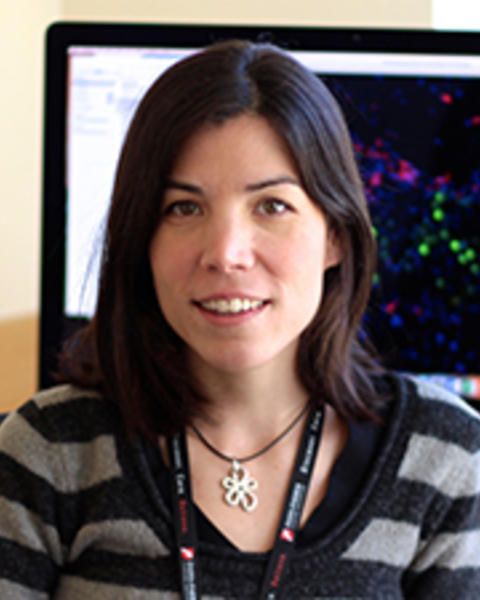
Dr. Najla Arshad serves as Assistant Professor in the Department of Microbiology and Immunology at Rosalind Franklin University's Chicago Medical School, with joint appointments in the School of Graduate and Postdoctoral Studies. Her research bridges fundamental immunology with translational cancer therapeutics, focusing on endoplasmic reticulum (ER) chaperones and their role in antigen presentation by MHC-I molecules.
Dr. Arshad completed her PhD at the Indian Institute of Science, Bangalore under Dr. Sandhya S. Visweswariah, investigating glycan-mediated regulation of intestinal receptors. She then pursued postdoctoral training at Yale University in Dr. Peter Cresswell's Immunobiology lab (studying MHC-I downregulation in cancer) and Dr. Edelson's Dermatology lab (developing cellular immunotherapies).
Her research program features two synergistic arms: a basic science division examining ER chaperone-immune protein networks and comparative bat immunology, and a translational initiative targeting mutant calreticulin-driven myeloproliferative neoplasms (MPN) through nanobody and dendritic cell therapies. Recent publications reveal consistent contributions to understanding viral immune evasion (SARS-CoV-2), cancer antigen presentation, and ER proteostasis mechanisms, frequently appearing in journals like PNAS and Journal of Immunology.
Scientific recognition includes:
- MPN Research Foundation Junior Investigator Award (2022-2025)
- Cancer Research Institute Irvington Fellowship (2015-2018)
- Dual F1000 Prime Recommendations for calreticulin research (2018)
- Competitive Indian Institute of Science fellowships
Dr. Arshad currently leads an MPN Research Foundation-funded project developing novel therapies while maintaining collaborations with clinical researchers. Her lab cultivates interdisciplinary expertise in molecular immunology, therapeutic engineering, and comparative species analysis to address fundamental questions in immune regulation and cancer pathogenesis.
The Arshad Lab operates within Rosalind Franklin University's Center for Cancer Cell Biology, Immunology, and Infection, utilizing cutting-edge nanobody platforms, multi-omics approaches, and specialized bat cell line models to investigate ER chaperone functions across disease contexts.