معرفی
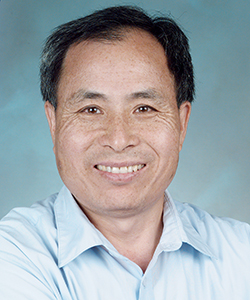
Yung-Fu Chang, DVM, MS, PhD, is Professor in the Department of Population Medicine & Diagnostic Sciences at the College of Veterinary Medicine, Cornell University, and concurrently serves as Director of the Infectious Disease Program at the New York State Animal Health Diagnostic Center. Since arriving at Cornell in 1989 he has risen from Assistant to Associate (1996) and then full Professor (2003), with a visiting appointment at Stanford University in 2003.
Education:
- DVM, 1974 – National Pingtung Institute of Agriculture (now National Ping-Tung University of Science and Technology), Taiwan
- MS, 1981 – University of Idaho, Moscow, Idaho (Immunology/Pathology)
- PhD, 1984 – Texas A&M University, College Station, Texas (Microbiology/Immunology)
- Post-doctoral Fellowship, 1984–1989 – Texas A&M University (Molecular Biology/Genetics)
Research Themes:
Dr. Chang’s laboratory integrates functional genomics, proteomics, metabolomics, and animal models to dissect host–pathogen interactions and develop next-generation vaccines. Major programs include:
- Clostridioides difficile infection: Using RNA-seq, comparative genomics and mouse models to define spore-formation triggers, toxin regulation and gut metabolome changes.
- Vaccine & diagnostic innovation: Recombinant subunit and outer-membrane-vesicle vaccines against Leptospira spp., Mycobacterium avium subsp. paratuberculosis, and Pasteurella multocida; adjuvant and delivery platforms (liposomes, microspheres, attenuated Salmonella vectors).
- Adhesin-receptor biology: Structure–function studies of bacterial MSCRAMM proteins (e.g., LigA/LigB, Apa) and host ECM receptors to block colonization.
- Antimicrobial resistance surveillance: Global genomics of carbapenem-resistant E. coli, hypervirulent Klebsiella, and multidrug-resistant veterinary isolates.
Publication Impact:
Across >200 peer-reviewed papers (2019–2025 highlights provided), the body of work reveals a trajectory from molecular pathogenesis of RTX toxins in the 1990s to contemporary multi-omics vaccine design. Recent articles emphasize glycoconjugate vaccines, cell-free thermostable platforms, membrane-vesicle antigens, and pan-genomic reverse vaccinology, underscoring a commitment to translational solutions for animal and public health.
Awards & Honors:
- Diplomate, American College of Veterinary Microbiologists
- Phi Sigma & Phi Zeta National Honor Societies
- Who’s Who in America
- Distinguished Alumnus, National Ping-Tung University of Science and Technology (2007)
Service & Outreach:
Dr. Chang serves as Treasurer of the American Leptospirosis Research Conference, Associate Editor for Journal of Veterinary Science and PLoS ONE, and Editor-in-Chief for Advances in Microbiology and Advances in Infectious Diseases. He has advised the Cornell Taiwanese Graduate Student Association since 1996 and is active in the AAVLD, ASM, CRWAD, and the International Leptospirosis Society.
Laboratory & Teams:
The Chang Laboratory at Cornell comprises post-doctoral fellows, graduate students, and technicians working in BSL-2/3 facilities equipped for genomics, proteomics, metabolomics, and small-animal challenge studies. The lab collaborates extensively with the New York State Animal Health Diagnostic Center and international consortia in Brazil, China, and Europe.