معرفی
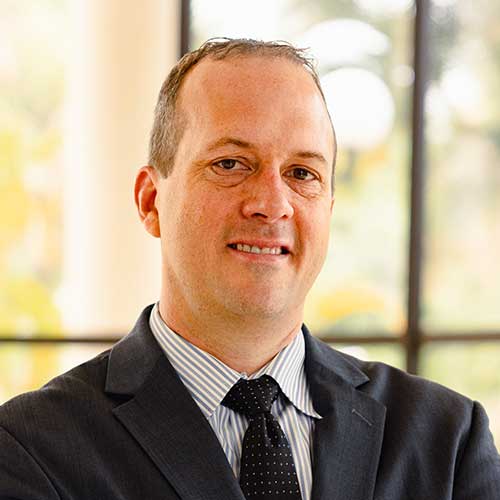
Kenneth Quick serves as an Assistant Professor within the College of Sciences at DeSales University, teaching undergraduate and graduate courses spanning law enforcement, criminal investigations, drugs, and organized crime. His academic appointment follows a distinguished 25-year career with the New York City Police Department (NYPD), where he retired at the rank of Inspector after commanding street crime units, a Brooklyn precinct, and the Employee Relations Bureau.
His academic credentials include:
- Ph.D. in Criminal Justice from John Jay College of Criminal Justice
- Dual Master's degrees in Criminal Justice and Emergency Management
- Graduate of Columbia University’s Police Management Institute
Dr. Quick's research program critically examines police organizational dynamics, focusing on recruitment/retention challenges, officer wellness initiatives, human-animal interactions within justice systems, and community-police satisfaction metrics. His work bridges theoretical criminology with practical law enforcement applications, informed by extensive field experience in high-stakes command roles.
He currently leads U.S. Department of State-sponsored capacity-building projects in Latin America while serving as an instructor for Penn State’s Justice and Safety Institute, delivering leadership training to police supervisors globally. His NYPD tenure included developing evidence-based wellness strategies in response to officer suicide crises as Commanding Officer of the Employee Relations Bureau.
Scientific Awards:
- No formal scientific awards documented in source material
Dr. Quick advises criminal justice students while directing international research collaborations focused on sustainable policing reforms. His grant-funded work with the State Department emphasizes long-term institutional development, complemented by Penn State leadership training programs targeting organizational culture transformation in law enforcement agencies worldwide.
He operates within transnational research teams conducting field studies in Latin America and maintains operational partnerships with U.S. justice training institutions, leveraging his unique dual perspective as scholar-practitioner to advance evidence-based policing methodologies.