معرفی
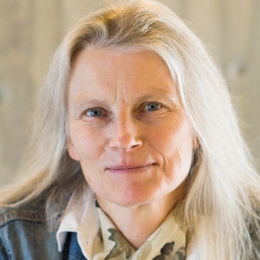
Julia Velkova is an Associate Professor in Media and Communication Studies and a Lecturer in Technology and Social Change at Linköping University. She is affiliated with the Department of Tema, specifically the Department of Culture, Society, Design and Media and Theme Technology and Social Change. She is also a Pro Futura Scientia fellow (2023-2028), a prestigious five-year research program in the humanities and social sciences.
Dr. Velkova's research focuses on the dismantling of communication infrastructure and the interaction between digitalization and energy. She leads several significant research projects including 'The dismantling of communications infrastructure in Sweden,' 'Megabytes vs Megawatts' which examines the environmental sustainability of data centers, and 'REIMAGINE ADM' which explores how public values intertwine with algorithmic systems. She is particularly interested in how aging and dismantling communication infrastructures challenge ideas about citizenship and the role of 'old' networks in society.
Her recent publications show a strong focus on critical data studies, environmental impacts of digital infrastructure, and the societal implications of technological change. Her work bridges sociology, media studies, and environmental studies, with particular attention to the material aspects of digital technologies and their sustainability implications.
Her scientific recognition includes:
- Pro Futura Scientia fellow (2023-2028)
Dr. Velkova is actively engaged in public discourse, with media appearances in Dagens Nyheter, Swedish Radio, and other outlets where she discusses topics like Sweden's role as a 'low-cost country' for data centers and the environmental impacts of digitalization. She has also founded and co-chairs Temas DataLab, a forum for co-creation and experimentation with scientific practices and communication.
She leads the research project studying the dismantling of the copper telephone network in Sweden, examining how different actors negotiate and implement infrastructure dismantling, what conflicts arise, and how these processes are experienced in everyday life. Her work aims to problematize assumptions about 'technological progress' and open new directions in infrastructure research.