معرفی
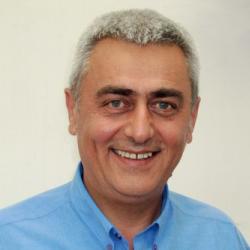
Dr. Joris Wijnker is a Researcher at Utrecht University's Faculty of Veterinary Medicine, specifically within the Department of Population Health Sciences at the Institute for Risk Assessment Sciences (IRAS). He holds a PhD earned in 2009 and is registered as a Specialist Veterinary Public Health (RDVA) since that year. In addition to his academic role, Dr. Wijnker serves in the Royal Netherlands Army as brigade-veterinarian with the Operational Support Command Land and with the NATO C2 Centre of Excellence, reflecting his dual expertise in veterinary medicine and military applications.
His research interests span Veterinary Public Health, Veterinary Microbiology, Risk Assessment, Crisis Management, Animal Welfare, Civilian-Military Relations, and Academic Veterinary Education. Dr. Wijnker has established himself as a specialist in natural sausage casing safety, viral inactivation in food production, and the application of assistance dogs for veterans with PTSD. His work bridges veterinary science with public health concerns, particularly in emergency situations and military contexts.
Analysis of his recent publications reveals a clear progression from fundamental food safety research on viral inactivation in natural casings toward more applied crisis management and human-animal interaction studies. His work has evolved to include animal triage protocols for disasters, military health applications, and the therapeutic use of assistance dogs for veterans with PTSD. This demonstrates his ability to translate veterinary science into practical applications across multiple domains including food safety, disaster response, and mental health support.
Dr. Wijnker chairs the Animal Disaster Education (ADE) Foundation, which trains first responders in animal emergency care, and he initiated the V-PWR project focusing on assistance dogs for veterans with PTSD. He also operates VPH Consultancy, extending his expertise to practical applications beyond academia. His work demonstrates significant crossover between veterinary medicine, public health, military applications, and disaster preparedness, with increasing emphasis on the human-animal bond in therapeutic contexts in recent years.