معرفی
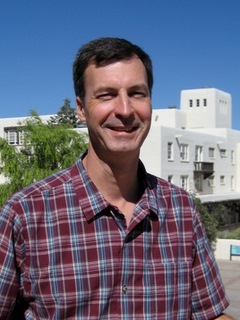
Jonathan A. Brant is a Professor in the Department of Civil & Architectural Engineering at the University of Wyoming, within the College of Engineering and Physical Sciences. He serves as the Director and Research Lead of the Center for Excellence in Produced Water Management (CEPWM), where he leads innovative research in water treatment, nanotechnology, and resource recovery from industrial wastewaters, particularly oil and gas produced waters.
Dr. Brant earned his B.S. in Civil Engineering from the Virginia Military Institute (1998), followed by an M.S. (2000) and Ph.D. (2003) in Environmental Engineering from the University of Nevada, Reno. His professional affiliations include the American Society of Civil Engineers (ASCE), Environmental and Water Resources Institute (EWRI), American Water Works Association (AWWA), North American Membrane Society (NAMS), Water Environment Federation (WEF), and the Association of Environmental Engineering and Science Professors (AEESP).
His research is centered on advanced water treatment technologies, with a focus on membrane processes, nanomaterials, and the fate and transport of engineered nanoparticles in aquatic systems. He investigates both fundamental mechanisms—such as membrane fouling and nanoparticle stability—and applied solutions like nanocomposite membranes, resource recovery from brines, and desalination systems driven by soil-water potentials. His work bridges environmental sustainability with industrial applicability, particularly in the energy sector.
The recent publications (2018–2021) reflect a strong trend in utilizing nanotechnology for water treatment, including magnetic nanoparticle applications, bio-inspired membranes, and imogolite-based nanocomposites. These works span disciplines such as environmental engineering, materials science, and physical chemistry, demonstrating interdisciplinary innovation aimed at solving complex water challenges.
Dr. Brant has contributed to the field through numerous invited book chapters and technical reports funded by organizations like the American Water Works Association Research Foundation and the U.S. Bureau of Reclamation. His leadership in CEPWM involves managing projects related to membrane technology, rare earth element recovery, and techno-economic assessments of water reuse.
He advises graduate students and teaches core courses including CE 3400 (Introduction to Environmental Engineering), CE 4400 (Water Treatment Design), CE 4410 (Wastewater Treatment Design), and advanced graduate courses in water reuse and physicochemical treatment. His lab and research team are actively engaged in developing next-generation solutions for sustainable water resource recovery.