معرفی
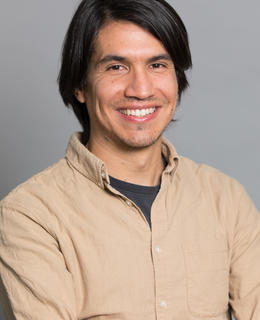
Johnathan Canton is an Assistant Professor (Teaching & Research) in the Faculty of Veterinary Medicine at the University of Calgary. He holds additional appointments as a Full Member of The Calvin, Phoebe and Joan Snyder Institute for Chronic Diseases, an Associate Member of the Hotchkiss Brain Institute, and a Full Member of the Arnie Charbonneau Cancer Institute.
Dr. Canton received his educational training as follows:
- PhD in Microbiology and Cell Science, University of Florida, 2012
- BSc in Microbiology and Cell Science, University of Florida, 2008
- Associate's Degree in Biology, Chemistry and Mathematics, St. John's College Junior College, Belize, 2005
His research program focuses on the very earliest events in immune response initiation, particularly studying apolipoprotein control of antigen cross-presentation and tumor immunity. Using high-throughput and super-resolution light microscopy, Dr. Canton's laboratory investigates the complex interplay between threat-sensing cells and effector cells responsible for restoring homeostasis. His approach has been instrumental in unraveling the biophysical interactions that mediate immunity, with applications to autoimmunity and cancer research.
Dr. Canton's recent publications (2021-2025) demonstrate a strong emphasis on phagosome biology, antigen presentation mechanisms, and immune recognition, with particular focus on apolipoproteins like APOL7C and their role in phagosomal rupture. His work spans from fundamental cellular mechanisms to translational applications in cancer immunotherapy and infectious disease.
Dr. Canton teaches several courses at the University of Calgary:
- VETM 307 Professional Skills I (Fall 2021)
- VETM 343 Immunology (Winter 2021, Spring 2022)
- VETM 690 Directed Studies - Selected topics in Immunobiology (Fall 2021)
Prior to joining the University of Calgary in 2021, Dr. Canton completed his PhD at the University of Florida, followed by postdoctoral training with Sergio Grinstein at the Hospital for Sick Children (SickKids) in macrophage biology, and later joined the lab of Caetano Reis e Sousa at the Francis Crick Institute in the UK.