معرفی
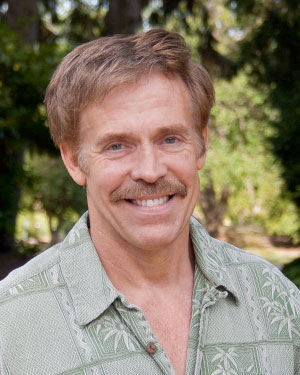
John Stark is a Professor of Entomology at Washington State University (WSU), serving as Director of the Washington Stormwater Center and a key member of the Department of Entomology within the College of Agricultural, Human, and Natural Resource Sciences (CAHNRS). His research focuses on ecological risk assessment, pesticide effects on endangered species, and the ecotoxicology of pollutants in aquatic and agricultural ecosystems. He leads the Ecotoxicology Program at WSU Puyallup and the Washington Stormwater Center, addressing challenges like salmon protection and stormwater management.
Education includes B.S. degrees in Forest Biology and Biology from Syracuse University and SUNY Environmental Science and Forestry, followed by M.S. and Ph.D. in Entomology from Louisiana State University and the University of Hawaii, respectively.
Research interests emphasize population-level risk assessments using demographic models and matrix approaches, particularly targeting endangered species such as salmon, invertebrates, and butterflies. He investigates how pesticides, stormwater runoff, and other pollutants impact ecosystems, with recent projects analyzing low-impact development effects on salmon health and pesticide impacts on endangered butterflies.
His awards include the C.W. Woodworth Award (2005), Excellence in Research Award (2010), and induction into the Washington State Academy of Sciences (2019). Notable contributions include authoring the textbook Demographic Toxicity: Methods in Ecological Risk Assessment (2008) and over 140 peer-reviewed papers.
Leadership roles span national and state committees, including the Billy Frank Jr. Salmon Coalition, the Washington State Toxics Reduction Strategy Group, and the Puget Sound Partnership Science Panel. He has advised on policy issues like stormwater regulations, pesticide management, and salmon conservation.
Labs and teams include the Washington Stormwater Center, Ecotoxicology Program, and collaborations with institutions like the Pacific Northwest National Laboratory and the U.S. EPA. His work bridges academia, policy, and practical solutions for environmental challenges.