معرفی
John Isaac Murray is a Professor of Genetics at the Perelman School of Medicine, University of Pennsylvania. His laboratory focuses on understanding how genomes orchestrate animal development at single cell resolution using the nematode worm Caenorhabditis elegans as a model organism. Dr. Murray's research integrates powerful imaging-based experiments with genomics and computational tools to determine gene expression patterns across entire embryos at single cell resolution.
Dr. Murray received his B.S. in Civil Engineering with a minor in Biology from Carnegie Mellon University in 1999, followed by a Ph.D. in Genetics from Stanford University in 2004. He completed his post-graduate training as a Senior Fellow in Genome Sciences at the University of Washington from 2003 to 2009, working in the laboratory of Robert Waterston.
Dr. Murray's research interests span developmental biology, genomics, and gene regulation. His laboratory has developed innovative lineage tracing methods that allow quantitative determination of gene expression at single cell and approximately 1-minute temporal resolution for essentially all embryonic cells. Current research focuses on three main areas: (1) improved technology for lineage tracing and expression mapping in developing embryos, (2) mechanisms ensuring robust development across environmental conditions, and (3) defining mechanisms of context specificity in developmental gene regulation. His work has revealed how transcription factors and signaling pathways regulate developmental gene expression, with implications for understanding cancer and other human diseases.
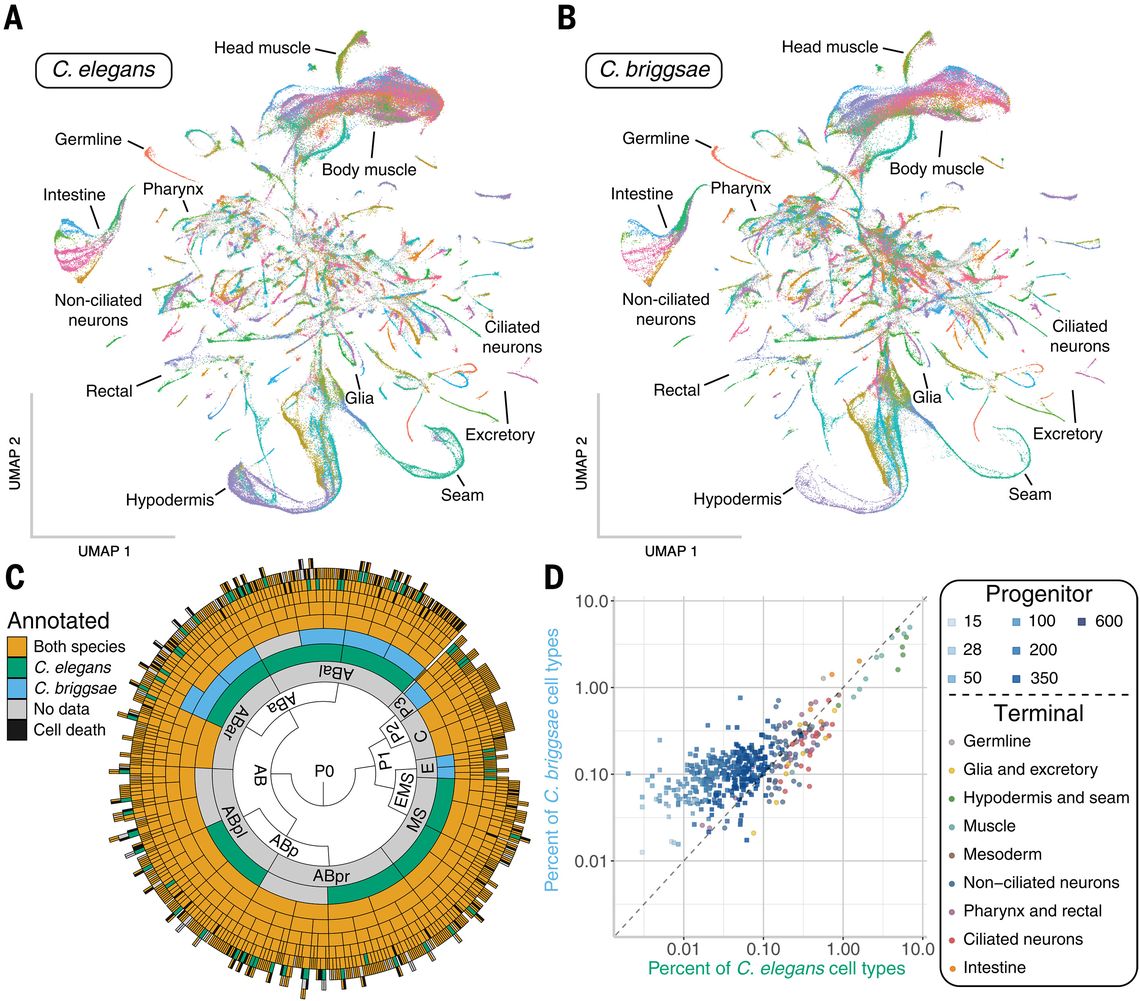
Dr. Murray's laboratory has produced significant publications in high-impact journals including Science, Genome Research, and Genetics. His recent work has focused on single-cell resolution analysis of embryonic gene expression evolution, mRNA decay dynamics in developing embryos, and comprehensive mechanisms of lineage specification in C. elegans. His research employs cutting-edge techniques including live-cell imaging, single-cell RNA sequencing, and computational analysis to build comprehensive molecular atlases of embryonic development across multiple species.
- Large CRL, et al. (2025). Lineage-resolved analysis of embryonic gene expression evolution in C. elegans and C. briggsae. Science.
- Peng F & Murray JI (2024). A spatiotemporally resolved atlas of mRNA decay in the C. elegans embryo. Genome Research.
- Liu J & Murray JI (2023). Mechanisms of lineage specification in Caenorhabditis elegans. Genetics.
Dr. Murray has mentored numerous students and postdoctoral fellows who have gone on to successful careers, including Dr. Felicia Peng who recently completed her PhD in his laboratory, Dr. Priya Sivaramakrishnan who now leads her own laboratory at the Children's Hospital of Philadelphia, and Dr. Amanda Zacharias who is an Assistant Professor at Cincinnati Children's Hospital Medical Center. His laboratory is affiliated with several graduate programs at Penn including Biomedical Graduate Studies, Cell and Molecular Biology, Genomics and Computational Biology, Biochemistry and Molecular Biophysics, and Bioengineering.
The Murray laboratory maintains active collaborations with other research groups and has contributed to studies on chromatin regulation, neuronal development, and cuticle formation in C. elegans. Dr. Murray's work continues to advance our understanding of how genomes control the complex process of animal development at unprecedented resolution.