معرفی
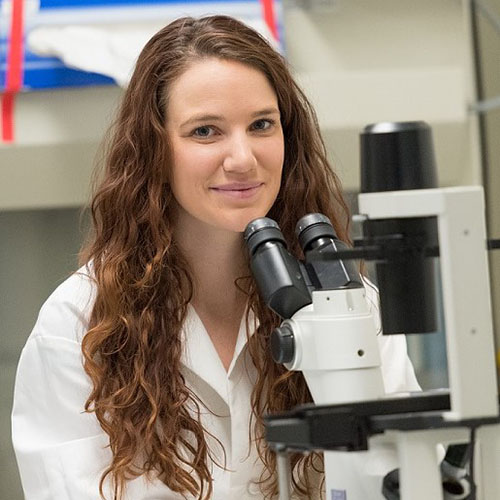
Jason Knott is a Professor in the Genetics & Genome Sciences Program at Michigan State University where he leads an active research laboratory focused on identifying molecular mechanisms that regulate early embryogenesis in mammals. His work has significant implications for understanding preimplantation arrest, implantation failure, and early miscarriage.
Dr. Knott's research interests center on transcriptional and epigenetic regulators that control critical developmental processes including cell polarity, pluripotency, and trophoblast lineage formation in preimplantation embryos. His laboratory employs loss-of-function and gain-of-function studies in mouse preimplantation embryos and embryonic stem cells to determine the role of these molecular regulators. His work spans multiple model systems including mouse, pig, and bovine embryos, demonstrating a comprehensive approach to understanding conserved mechanisms of early development.
Analysis of Dr. Knott's recent publications (2020-2025) reveals consistent research themes across developmental biology with particular emphasis on TFAP2C function, RNA/DNA methylation mechanisms (m6A), Hippo signaling pathway, and blastocyst development. His work demonstrates how alterations in early embryonic features have dire consequences including preimplantation arrest, implantation failure, and early miscarriage. His research has increasingly incorporated advanced genomic techniques including single-cell transcriptome profiling and CRISPR-based gene activation approaches.
Dr. Knott's laboratory conducts fundamental research with potential clinical applications in reproductive medicine. Through his work on oocyte quality, embryonic development, and live birth rates, his research bridges basic science with potential applications in assisted reproductive technology. His studies on environmental factors (including heavy metals) and their effects on embryonic development and offspring health further demonstrate the translational relevance of his work.