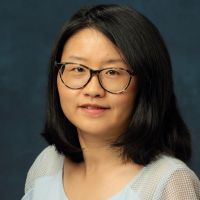
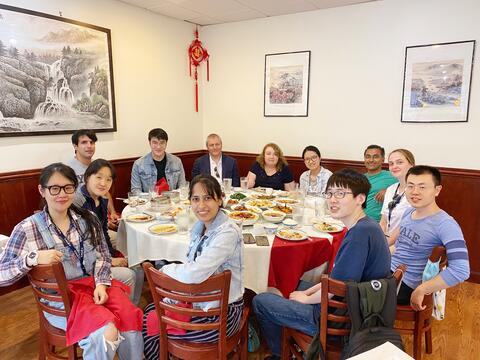
Ejung Moon is a Group Leader in Radiation Biology and the Tumour Microenvironment at the Department of Oncology, University of Oxford's Medical Sciences Division. Her research focuses on hypoxia-driven tumor progression and radiation response mechanisms. Education: PhD in Pharmacology and Cancer Biology from Duke University Training: Postdoctoral work with Amato Giaccia at Stanford University Research Interests: Elucidating how hypoxia-induced MAFF protein regulates tumor cell invasion, metastasis, and radiation resistance through antioxidant response pathways. Current work explores MAFF dimerization dynamics and metabolic reprogramming in hypoxic tumors. Scientific Contributions: Identified MAFF's role in radiation-induced antioxidant gene regulation (2021, Nature Communications ). Recent studies investigate iron metabolism's impact on FLASH radiotherapy effects. Scientific Awards: Breast Cancer Research Program (BCRP) predoctoral fellowship Laboratory & Collaborations: Moon Lab collaborates with Oxford Cancer and NHS Cancer and Haematology Centre. Key partnerships include Stanford University's radiobiology research groups.
University of California , Santa Barbara (UCSB)United States
Professor Omar A. Saleh is a distinguished physicist and materials scientist at the University of California, Santa Barbara, holding appointments in both the Materials and Physics Departments. Since summer 2023, he has served as Chair of the Materials Department and maintains a minority appointment in the Biomolecular Science and Engineering (BMSE) Program, where he previously served as Director from 2013-2017. His educational background includes a B.S. in Physics from MIT (1997) and a Ph.D. in Physics from Princeton (2003), supported by a Hertz Fellowship. Following postdoctoral work at École Normale Supérieure in Paris developing single-molecule techniques for motor protein/DNA studies, he joined UCSB in 2005. Saleh's research centers on fundamental principles of biomolecular behavior through experimental investigation of biopolymer elasticity and biomimetic organelles. His lab pioneers precision single-molecule stretching experiments to study entropic/energetic contributions in soft systems and creates life-like behaviors using reconstituted nucleic acid/protein assemblies. Key focus areas include DNA nanostar phase separation, liquid-liquid phase behavior, intrinsically disordered proteins, and non-equilibrium biomolecular systems. His publication trends reveal a strong emphasis on biomolecular condensates (2023-2025), with recurring themes in DNA nanotechnology, polyelectrolyte physics, and single-molecule mechanics. Recent work explores tension-mediated control of phase separation, transcriptional regulation of biomolecular liquids, and active matter principles in DNA systems. NSF CAREER Award (2008) Bessel Research Award from Alexander von Humboldt Society (2017) Fellow of the American Physical Society (2019) Saleh actively mentors graduate students and postdocs including Sam Wilken, Gabrielle Abraham, Anna Nguyen, and Aria Chaderjian, whose research spans DNA nanostar liquids, active droplets, and complex coacervation. His lab develops innovative instrumentation including high-speed magnetic tweezers and GPU-based tracking systems, supported by grants such as NSF/MCB-BSF: Direct force measurements of intrinsically disordered proteins. The Saleh Group operates at BioE 3006, focusing on creating quantitative models of biological function through physical reconstitution.
Swiss Federal Institute of Technology in LausanneSwitzerland
Didier Trono is a Full Professor at École Polytechnique Fédérale de Lausanne (EPFL), where he leads the Laboratory of Virology and Genetics (LVG) within the School of Life Sciences. Formerly, from 2004 to 2012, he served as the founding dean of EPFL's Faculty of Life Sciences, orchestrating its development and growth during this formative period. Trono received his medical education at the University of Geneva, followed by clinical training in pathology, internal medicine, and infectious diseases in Geneva and at Massachusetts General Hospital in Boston. His scientific career began at the Whitehead Institute of MIT, and in 1990 he was recruited by the Salk Institute of San Diego to launch an AIDS research center. After seven years in the United States, he returned to Europe and eventually joined EPFL. Dr. Trono's research has evolved significantly over his career. Initially focusing on virus-host interactions, he studied pathogens like HIV and Hepatitis B virus, creating HIV-derived genetic transfer tools that are now successfully used in gene therapy. For approximately the last fifteen years, his research has centered on epigenetics, particularly exploring the impact of retroelements and their control mechanisms on development and physiology of higher organisms, including humans. His laboratory investigates how transposable elements and KRAB zinc finger proteins regulate gene expression, with important implications for understanding cancer biology and developing new diagnostic and therapeutic approaches. Analysis of his recent publications (2022-2024) reveals a strong focus on transposable elements, KRAB zinc finger proteins, and their roles in gene regulation and cancer. His work combines molecular biology, genomics, and bioinformatics approaches to understand how these ancient viral remnants have been co-opted by the host genome to regulate development and cellular functions. The research spans basic molecular mechanisms to potential clinical applications in cancer diagnosis and therapy, with some recent work also addressing SARS-CoV-2 and immune responses. Throughout his career, Professor Trono has mentored numerous PhD students, including Bojkowska Karolina, Brandão Sanches Vong Martins Filipe Amândio, Bulliard Yannick, Coluccio Andrea, Corsinotti Andrea, Coudray Alexandre, De Tribolet-Hardy Jonas Caspar, and Dorschel Iris Arianna. His laboratory has received significant funding to support research at the intersection of virology, genetics, and epigenetics, contributing to EPFL's reputation as a leading institution in life sciences research. The Trono Laboratory continues to be at the forefront of research on retroelements and their regulatory mechanisms, maintaining a vibrant research environment that bridges fundamental biological questions with potential medical applications, particularly in cancer research and precision medicine.
Harris H. Wang is an Associate Professor in the Department of Systems Biology and Department of Pathology and Cell Biology at Columbia University's Vagelos College of Physicians and Surgeons, where he also serves as Interim Chair of Systems Biology. He is affiliated with the Center for Computational Biology and Bioinformatics (C2B2) and the Integrated Program in Cellular, Molecular and Biomedical Studies (CMBS). B.S., Physics and Mathematics, MIT Ph.D., Biophysics, Harvard University Dr. Wang's research lies at the intersection of systems and synthetic biology, focusing on developing foundational technologies for genome engineering, microbiome manipulation, and synthetic genomics. His lab pioneers methods such as MAGE, MAGIC, CAST, and CAMII to enable high-throughput genetic manipulation, in situ microbiome engineering, and AI-driven microbial culturomics. Key research themes include understanding microbial community dynamics, engineering cellular memory systems, designing biocontained genetic circuits, and applying synthetic biology to human health challenges in personalized medicine and infectious disease. His recent publications reveal a strong trend in spatial and functional metagenomics, CRISPR-based microbiome editing, and synthetic biology tools for data storage and genetic stability. The articles span high-impact journals like Nature , Science , and Nature Biotechnology , reflecting his leadership in developing scalable, programmable biological systems. Scientific Awards: NIH Director’s Early Independence Award Forbes 30 Under 30 in Science Sloan Research Fellowship NSF CAREER Award ONR Young Investigator Award Burroughs Wellcome Fund PATH Award Schaefer Scholar Blavatnik National Award Vilcek Prize PECASE Dr. Wang has advised numerous PhD and postdoctoral researchers, many of whom have gone on to independent scientific careers. His lab is supported by major grants from NIH, NSF, DARPA, DOE, and foundations including the Bill & Melinda Gates Foundation and CZ Biohub NY. He is actively involved in educational initiatives, including organizing Columbia’s iGEM team and the Cold Spring Harbor Laboratory Synthetic Biology course. The Wang Lab is based at the Columbia University Irving Medical Center and is part of national consortia such as the Engineering Biology Research Consortium (EBRC) and the Genome Project-Write (GP-Write) initiative. The lab develops and applies cutting-edge technologies in automation, machine learning, and synthetic biology to engineer microbiomes for applications in medicine, global health, and climate change.
Max Planck Institute for Plant Breeding ResearchGermany
Adam Runions is a researcher in the Department of Computer Science at the University of Calgary, leading the MPG Partner Group in computational analysis of leaf development through collaborative work with Miltos Tsiantis. His group is embedded in the Graphics Cluster, focusing on interdisciplinary problems at the intersection of computer science and developmental biology. University of Calgary - Department of Computer Science MPG Partner Group (2022) Graphics Cluster affiliation His research explores computational modeling and analysis of plant form and development across multiple scales, integrating geometric modeling, physically-based simulation, and computer-aided design. Key themes include plant morphogenesis, self-organization of natural forms, and cross-disciplinary applications in computer graphics and animation. Recent publications emphasize plant development (leaf shape, bark patterning), mathematical modeling (auxin-driven patterning), and geometric techniques (subdivision surfaces, PUPs). Collaborations span institutions like the Max Planck Institute for Plant Breeding Research. Scientific Awards Marie Sklodowska-Curie Fellowship Best Paper Award (International Conference on Cyberworlds 2015) Best Student Paper Award (Computer Graphics International 2011) The group actively recruits BSc, MSc, and PhD students with backgrounds in computer science and mathematics for projects on plant form simulation and digital content creation. Research integrates evolutionary biology, biomechanical modeling, and computational techniques.
Vivek Shenoy is the Eduardo D. Glandt President's Distinguished Professor at the University of Pennsylvania, with primary appointments in the Department of Materials Science and Engineering and secondary appointments in Bioengineering and Mechanical Engineering and Applied Mechanics. He leads the Multiscale Mechanobiology and Biomaterials Laboratory, which focuses on developing theoretical frameworks and numerical methods to understand complex biological and engineering systems across multiple length scales. Shenoy's research spans mechanobiology, chromatin organization, cell mechanics, and biomaterials. His work addresses the fundamental challenge of modeling how small-scale cellular phenomena couple with long-range tissue-level interactions across micrometers to centimeters. By integrating insights from soft matter physics, solid mechanics, chemistry, and applied mathematics, his group develops multiphysics continuum and mesoscale theories to elucidate mechanisms controlling both biological and engineering systems. His recent publications demonstrate an increasing focus on nuclear mechanics, chromatin organization, and the interplay between mechanical forces and gene regulation. Analysis of Shenoy's publication record reveals a strong interdisciplinary approach, with high-impact papers spanning biophysics, materials science, and cell biology. His work shows consistent evolution from fundamental mechanics of materials to complex biological systems, with recent emphasis on the mechanical regulation of chromatin architecture, cell migration dynamics in 3D environments, and mechanotransduction in development and disease. His publications appear regularly in top journals including Nature, Science, and their affiliated publications, demonstrating significant influence across multiple fields. Eduardo D. Glandt President's Distinguished Professor Multiple publications in Nature, Science, and PNAS Active research program with publications through 2025 Shenoy actively mentors students and postdocs through his laboratory, with numerous co-authored publications indicating strong mentorship. His research program appears to be well-funded through multiple grants supporting his work in mechanobiology and biomaterials. The Multiscale Mechanobiology and Biomaterials Laboratory maintains active collaborations across disciplines and institutions, reflecting the interdisciplinary nature of his research. The Multiscale Mechanobiology and Biomaterials Laboratory, housed within the Department of Materials Science and Engineering at the University of Pennsylvania, serves as the primary research hub for Shenoy's work. The lab maintains an active presence on social media (Twitter: @ShenoyLab) for updates on activities and publications. Their research approach combines theoretical modeling with experimental validation to address fundamental questions at the interface of mechanics, materials science, and biology.
Alexis Battle is an Associate Professor at Johns Hopkins University with appointments in Biomedical Engineering , Computer Science , and Genetic Medicine (secondary). She directs the Malone Center for Engineering in Healthcare and serves as Deputy Director of the Data Science and AI Institute . Educated at Stanford University (PhD in Computer Science, 2013), Battle transitioned to academia after leadership roles at Google. Research Focus: Battle’s work bridges genomics and machine learning , emphasizing the impact of genetic variation on human health. Her lab develops tools like Watershed to predict functional effects of rare variants, aiming to enhance rare disease diagnosis. Key themes include non-coding DNA analysis , personalized genomics , and systems biology , with applications in cardiovascular disease and neurodegenerative disorders . Publications & Awards: Over 60 peer-reviewed articles in journals like Nature , Science , and Genome Biology , with recent emphasis on single-cell transcriptomics , multiomics integration , and telomere biology . Recipient of the President’s Frontier Award (2022), Microsoft Investigator Fellowship (2019), and Searle Scholar (2016). Scientific Awards: 2022 President’s Frontier Award 2019 Microsoft Investigator Fellowship 2019 Johns Hopkins Discovery Award 2017 Johns Hopkins Catalyst Award 2016 Searle Scholar Advising & Funding: Mentors 11 PhD students, 3 undergraduates, and postdoctoral fellows. Her research is funded by NIH, Searle Scholars, and institutional grants. The Battle Lab collaborates on projects like the GTEx Consortium , focusing on gene regulation and clinical genomics .
James B. Kaper is a Professor and Chair of the Department of Microbiology & Immunology at the University of Maryland School of Medicine. He serves as Vice Dean for Academic Affairs and previously held leadership roles as Senior Associate Dean (2014–2019) and Chair (2007–present). His research focuses on the molecular pathogenesis of diarrheagenic Escherichia coli and Vibrio cholerae , including vaccine development and bacterial-host interactions. Education: BS (1973) and PhD (1979) in Microbiology from University of Maryland; Postdoc in Molecular Pathogenesis at University of Washington (1979–1981) Dr. Kaper’s work has led to the creation of live attenuated cholera vaccines, including CVD 103-HgR, the first licensed recombinant bacterial vaccine. His lab investigates bacterial genetics, intestinal colonization, and immune system activation, particularly TLR5 response to V. cholerae flagellin. He has authored 303 peer-reviewed articles and 68 book chapters. His research has been funded continuously by NIAID since 1982. Key publications include foundational work on V. cholerae vaccines (1984), genomic structure (1998), and quorum sensing in EHEC/EPEC (1999). His lab’s recent studies focus on phosphotyrosine proteomics (2013) and pathogenicity island regulation (2007). Scientific awards: Fellow, American Academy of Microbiology (1994); NIH Merit Award (2004); ASM DC White Award (2019) Editorial roles: Editor-in-Chief, EcoSal (2006–present); Associate Editor, International Journal of Medical Microbiology (2000–present) As an academic leader, Dr. Kaper has mentored over 60 graduate students and postdoctoral fellows. He holds multiple patents for cholera vaccines and E. coli diagnostics, including U.S. Patents 4,935,364; 5,399,494; and 6,204,004. His lab at UMSOM combines basic science with translational applications for enteric disease prevention.
Ning Zhang is an Assistant Professor in the Biology Department at James Madison University (JMU), joining in 2024. Her research focuses on enhancing crop resilience through molecular and biochemical studies of plant defense mechanisms against bacterial pathogens, alongside developing genome editing technologies for trait improvement. She holds a PhD in Horticulture and Crop Science from The Ohio State University (2016), an MS in Silviculture from Zhejiang Agriculture and Forestry University (2011), and a BS in Landscape Architecture from Shandong Agricultural University (2008). Research Interests: Dr. Zhang's lab investigates plant immunity pathways, CRISPR/Cas9 genome editing applications, and engineering crops for disease resistance. Her work integrates molecular biology, genetics, and biochemistry to tackle challenges posed by climate change and biotic/abiotic stresses. Recent Trends in Publications: Her articles concentrate on MAPK signaling pathways, NLR protein interactions, PP2C phosphatase regulation, and bacterial effector mechanisms in tomato and other crops. Key themes include immune system activation, pathogen recognition diversity, and transgenic plant development. Lab Information: The Zhang Lab at JMU is part of the Department of Biology, focusing on plant biotechnology solutions for agricultural sustainability. They collaborate on projects involving CRISPR-based gene editing and stress tolerance research.
Peter Brodersen is a Professor at the Department of Biology, University of Copenhagen , specializing in Bioinformatics and RNA Biology . His research focuses on RNA modification (m6A), YTHDF proteins, and small RNA pathways in plants. Recent research trends from his group include: (1) molecular mechanisms of ARGONAUTE-small RNA interactions, (2) m6A-YTHDF regulatory systems in plant development, and (3) RNAi-independent roles of DICER-LIKE proteins in antiviral defense. Collaborations span Denmark and international institutions. Publications highlight cross-disciplinary work bridging computational biology and experimental plant genetics. Key subfields include RNA structure, epigenetic regulation, and antiviral immunity.
Karen Piper Hanley is Professor of Molecular Medicine and Head of Division in the Division of Diabetes, Endocrinology & Gastroenterology at the University of Manchester. She serves as the fibrosis lead in the Wellcome Trust Centre for Cell-Matrix Research and previously served as Director of Core Research Technologies (2019-2022). She is also an editorial board member for Scientific Reports. Her research focuses on fibrosis (scarring) mechanisms across multiple organs, particularly liver, kidney, and lung fibrosis. Her lab investigates the cellular and molecular basis of fibrotic disease, with emphasis on how pathological scar components are produced and how they signal to surrounding cells. Key areas include the role of SOX9 transcription factor, integrin beta-1 signaling, Group 1 PAKs, and YAP1 in fibrosis progression. Her recent publications reveal trends toward increased clinical translation of fibrosis research, with studies on health inequalities in liver cancer care, post-COVID diabetes incidence, and innovative approaches to liver disease detection. Her work increasingly integrates spatial transcriptomics and advanced omics technologies to understand cellular transitions in liver disease. Career-track postdoctoral fellowship from the University of Southampton (2006) As senior postgraduate tutor, she has mentored numerous PhD students who have presented at key conferences and authored high-quality manuscripts. All her PhD students have submitted and been awarded their degrees within 4 years. She has successfully guided previous Academic Clinical Fellows to win MRC clinical training fellowships. Her teaching extends to undergraduate Personal & Professional Development and supervision of MRes and BSc students, many of whom have achieved first-class degrees and prestigious awards. Her lab maintains active collaborations with Professor Neil Hanley's group on human development, stem cells, and regenerative medicine, bridging developmental biology with fibrosis research to understand why regeneration is impaired in chronic diseases.
University of Illinois Urbana-ChampaignUnited States
Ting Lu is an Associate Professor at the University of Illinois at Urbana-Champaign in the School of Biomedical and Translational Sciences, focusing on microbial synthetic biology and systems biology. Their research bridges biology, engineering, and physics to reprogram cellular functionalities through gene regulatory networks. Ph.D. in Biophysics, University of California at San Diego (2007) B.S. in Physics, Zhejiang University (2002) Ting Lu's work explores microbial ecosystems, synthetic gene circuits, and their applications in biotechnology and medicine. By combining experimental approaches with mathematical modeling, they investigate bacterial communication networks, metabolic pathways, and spatial dynamics in microbial communities. Selected research trends include microbial consortia engineering for bioremediation and bioproduction, complexity reduction in microbiomes, and predictive modeling of synthetic gene networks. Their publications span high-impact journals such as Nature Communications , Nature Chemical Biology , and eLife . Fellow, American Institute for Medical and Biological Engineering (2022) Future Insight Prize (2021) Donald Biggar Willett Faculty Scholar (UIUC) (2020) NIH Maximizing Investigators' Research Award (2019) NSF CAREER Award (2015) AHA National Scientist Development Grant (2012) Ting Lu's lab has received grants from NIH, NSF, ONR, and industry partners. They offer undergraduate research opportunities in synthetic and systems biology, and teach advanced courses such as BIOE 430 - Intro Synthetic Biology and BIOE 432 - Systems Biology .
Andre Levchenko is the John C. Malone Professor of Biomedical Engineering at Yale University, with secondary appointments in the Department of Neurosurgery and affiliations with the Cancer Signaling Networks, Immunology, and the Yale Program in Neurodevelopment and Regeneration. His research focuses on systems biology, signal transduction, and cell-cell communication, utilizing microfluidics and computational modeling to study cancer progression, stem cell behavior, and neurological disorders. PhD, Columbia University MEng, Moscow Institute of Physics and Technology Levchenko's work explores how cells process dynamic signals to make critical decisions, particularly in glioblastoma migration, organoid development, and cardiovascular tissue engineering. His lab develops innovative microfluidic platforms and mathematical models to dissect multicellular communication and signaling networks. Recent publications highlight his contributions to understanding YAP-driven cancer invasion , NOTCH signaling in angiogenesis , and metabolic regulation of hypoxia responses . He has pioneered methods for organoid modeling and single-cell analysis , advancing precision in biological signaling studies. Scientific Awards : Computational Molecular Biology Post-Doctoral Fellowship (Burroughs Wellcome Fund) National Academies Keck Futures Conference Invitee Distinguished Guest Lecturer, University of Virginia American Asthma Foundation Early Excellence Award Fellow, American Institute for Medical and Biological Engineering Levchenko leads the Levchenko Lab at the Yale Systems Biology Institute, collaborating with institutions like Mayo Clinic and Yale Cancer Center. His research has received recognition in Faculty of 1000 and multiple journal highlights.
James Briscoe is a Senior Group Leader at The Francis Crick Institute in London, where he leads a research group focused on developmental biology and morphogen signaling. He previously held positions at the Medical Research Council's National Institute for Medical Research, which later became part of the Francis Crick Institute. Education: BSc in Microbiology and Virology from the University of Warwick, UK PhD from Imperial Cancer Research Fund/King's College London Postdoctoral training at Columbia University with Thomas Jessell Dr. Briscoe's research focuses on the molecular and cellular mechanisms of graded signaling by morphogens and the role of transcriptional networks in cell fate specification. His laboratory employs a range of experimental and computational techniques using model systems including mouse and chick embryos and embryonic stem cells. His work has significant implications for understanding developmental processes and their relationship to disease. His recent publications demonstrate a continued focus on morphogen gradients, neural tube development, and computational approaches to understanding cell fate decisions. His research increasingly integrates single-cell technologies and computational modeling to unravel the complexities of developmental patterning. Scientific Awards and Honors: EMBO Young Investigator (2001) EMBO Gold Medal (2008) Elected to EMBO (2009) Fellow of the Academy of Medical Sciences (2019) Fellow of the Royal Society (2019) As Editor-in-Chief of the journal Development since 2018, Dr. Briscoe plays a significant role in shaping the field of developmental biology. His leadership extends to mentoring researchers and contributing to scientific policy discussions, as evidenced by his recent publication 'Science under siege: protecting scientific progress in turbulent times.' Dr. Briscoe's laboratory at the Crick Institute is well-equipped with access to advanced facilities including light microscopy, flow cytometry, genomics, and computational resources, enabling a multidisciplinary approach to developmental biology questions.
Manu Magar is a Researcher at the School of Biological Sciences , University of Western Australia , with a focus on plant genetics and climate resilience. They also hold an external position as a Biotechnologist at the National Biotechnology Research Center, Nepal Agricultural Research Council since May 2014. M.Sc.Ag. in Agricultural Science from Acharya N G Ranga Agricultural University (2012) B.Sc.Ag. in Horticulture from Tribhuwan University (2009) Research Interests Their work centers on plant breeding , gene expression , and crop genomics to combat heat stress in wheat. Key areas include transcription factor analysis , ERF gene regulation, and drought tolerance mechanisms. Article Trends Magar’s publications (2022–2025) emphasize AP2/ERF superfamily genes in wheat, heat tolerance pathways, and ethyline signaling during grain filling. Their work bridges genomic studies and transcription factor roles in stress response. Collaborations & Research Active in international collaborations between Australia, Nepal, and India, Magar contributes to crop improvement via genomic analysis and biotechnology .