معرفی
Joan Marler is an Associate Professor in the Department of Physics and Astronomy at Clemson University's College of Science, where she serves as Undergraduate Program Coordinator. Her research and teaching activities are centered in Kinard Laboratory, with dedicated office (Room 202A), classroom (G01B), and laboratory (Room 111) spaces supporting her experimental atomic physics program.
Dr. Marler's educational background includes:
- B.A. in Physics from Wellesley College (1999)
- Ph.D. in Physics from the University of California - San Diego (2005)
Her research program focuses on experimental studies of highly charged ions (HCIs) using the Clemson University Electron Beam Ion Trap (EBIT). Key investigations include precision spectroscopy of HCIs, laser-cooled singly-charged ion studies for state-to-state chemistry with ion/neutral pairs, and charge exchange cross section measurements. Her lab develops specialized instrumentation such as 3D-printed ion optics, bridging atomic physics with applications in astrophysics and plasma modeling.
Analysis of her recent publications (2019-2020) reveals three dominant research thrusts: atomic data generation for astrophysical plasmas through gold ion spectroscopy, fundamental studies of ion-molecule interactions across kinetic energy regimes, and innovation in ion manipulation technology. These efforts provide critical inputs for interpreting astronomical observations and advancing fusion energy research.
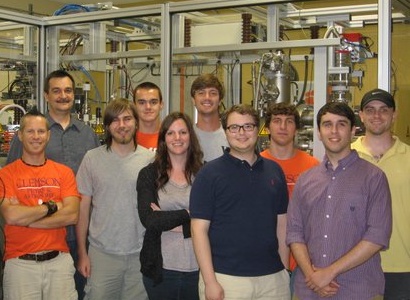
Dr. Marler actively mentors graduate students, with recent graduates including Tim (2024), Brynna (2023), and Rick (2023). Her research group participates in major conferences including APS-DAMOP and the National Nuclear Physics Summer School, supported by external funding enabling EBIT facility operations and instrumentation development.
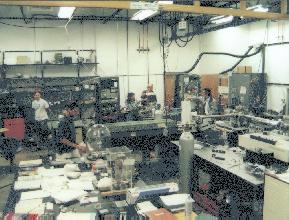
The Marler Lab maintains an active experimental program with recent infrastructure advancements including a newly installed jet system for ion experiments. Collaborations with institutions like Auburn University and membership in APS-DAMOP/AAS-LAD demonstrate integration within the national atomic physics community, with current work expanding into quantum-level ion-neutral chemistry and higher charge state spectroscopy.