معرفی
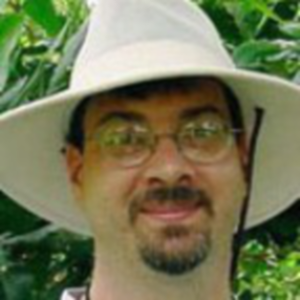
Jens Hauser is a visiting professor of art history at the Karlsruhe Institute of Technology (KIT) since October 2022, affiliated researcher at University of Copenhagen's Medical Museion, and senior postdoc researcher at the Medical University Vienna. He also holds positions at Michigan State University (where he co-directs the BRIDGE Artist in Residency program), Danube University Krems, University of Applied Arts Vienna, University of Innsbruck, and Université Paris I Panthéon-Sorbonne.
His academic background includes a doctorate from Ruhr University Bochum where he developed an aesthetic and epistemological theory of biomediality, and a degree in science and technology journalism from the Université François Rabelais in Tours. Hauser has been researching 'green' phenomena for over 30 years and coordinates the (OU)VERT network.
Hauser's research explores the intersections between art, science, and technology, with special focus on biomediality, microperformativity, contemporary art theory, and the staging of aliveness. His work examines how contemporary artistic practices engage with biotechnology, wetware, and the materiality of living systems. He has developed key theoretical frameworks including 'biomediality' (the ensemble of factors arising from technical manipulation of living organisms) and 'microperformativity' (conceptualizing attention to other-than-human agencies beyond human scales).
As an active curator, Hauser has organized over 30 international exhibitions and festivals, including the 2018 interdisciplinary conference of the European Society for Literature, Science and the Arts in Copenhagen. He serves on international art prize juries such as Ars Electronica, ST-ARTS, and Transitio, and has been a founding staff member of the European cultural broadcaster ARTE since 1992.
His scholarly output demonstrates consistent engagement with the philosophical and aesthetic implications of biotechnology in art, examining how contemporary practices challenge traditional boundaries between living/non-living and organic/synthetic. His work bridges theoretical scholarship with practical curatorial experience across multiple institutions in Europe and North America.