معرفی
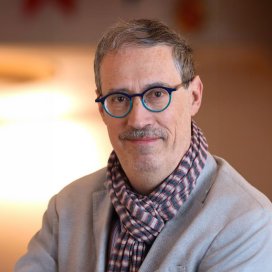
Jean Winand serves as Full Professor and Chair of Language, Literature and Writing of Ancient Egypt at the University of Liège since 2006, following over fifteen years as a researcher at the National Fund for Scientific Research. He held pivotal administrative roles including Dean of the Faculty of Philosophy and Letters (2010-2017) and First Vice-Rector of ULiège (2018-2022). Elected to the Royal Academy of Belgium in 2017, he currently holds a UNESCO chair on open science and interdisciplinarity in the humanities.
His educational foundation includes a Doctorate in Oriental Philology (1989), establishing his expertise in ancient languages. Winand's scholarly trajectory evolved from technical linguistic analysis toward broader historical and digital humanities inquiries, reflecting in his co-direction of the Ramses database project—a revolutionary resource for Neo-Egyptian philological research.
Research interests span the languages of Pharaonic Egypt (Classical and Neo-Egyptian), with deep focus on writing systems, lexical semantics, and literary text analysis. His recent work explores the Renaissance reception of hieroglyphs, particularly Athanasius Kircher's contributions, culminating in the 2022 Champollion decipherment bicentenary exhibition at Liège's Curtius Museum. This interdisciplinary approach bridges Egyptology with intellectual history and open science principles.
Publication trends reveal a progression from specialized grammatical studies (*Time and Aspect in Ancient Egyptian*, 2006) to accessible syntheses (*Hieroglyphs*, 2013) and historical analyses of Egyptology's evolution (*Hieroglyphs in Europe before Champollion*, 2022), emphasizing digital humanities and public scholarship.
Scientific recognition includes:
- Royal Academy of Belgium annual prize (1988)
- Belgian University Foundation quinquennial Alumni Prize (1998)
- Anneliese Maier Prize from the von Humboldt Foundation (2015)
- Knight of the Order of Academic Palms (2015)
Administrative leadership defines his career alongside research, with the Ramses project demonstrating sustained grant acquisition and collaborative scholarship. His UNESCO chair actively promotes open science frameworks in humanities, influencing institutional policy beyond ULiège.
Winand co-directs the Ramses project with Stéphane Polis (FNRS–ULiège), creating the field's only comprehensive Neo-Egyptian text database. This team enables complex grammatical and lexical queries, establishing a global standard for digital Egyptology while supporting his 2024 guest lecture series on Renaissance hieroglyphic studies.