معرفی
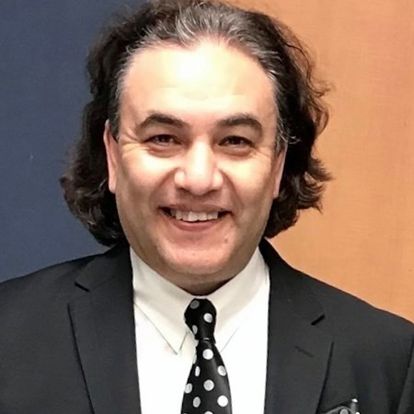
Javier A. Pinell serves as Professor of Violin at Sam Houston State University's School of Music, holding office in GPAC 120A. He maintains a dual affiliation as violin faculty at Michigan's Interlochen Center for the Arts, demonstrating significant institutional reach across prominent music education platforms in the United States.
Dr. Pinell specializes in Latin American musicology with groundbreaking research on Bolivian composers. His scholarly focus centers on recovering and performing neglected violin repertoire, particularly through his award-winning recordings that document Bolivia's musical heritage. His performance practice integrates historical instrument research, notably through the use of Alfred Stelzner's specialized string instruments for German Romantic repertoire.
His research output shows consistent thematic development across decades, evolving from early documentation of Bolivian compositions (1998's 'Bolivia: The Unknown Sounds') to recent world premieres like Ramiro Soriano's violin concerto (2024). This trajectory demonstrates deepening engagement with Latin American musical traditions while maintaining scholarly rigor in historical performance practices.
- Theodor Presser Award (1989 and 1997)
- Bolivian Ministry of Education recognition for musical preservation
- University research grant for Gustavo Navarre project
- International Music Council presentation (2016)
As an educator, Dr. Pinell has mentored musicians across four continents through master classes in Germany, China, and throughout Latin America. His chamber music leadership includes founding the Lindsayan String Quartet (with NEA/CMA residency) and current membership in the Kolonneh String Quartet. He actively collaborates with developing music programs across Colombia, Argentina, Bolivia, Mexico, and Ecuador, supporting initiatives like 'Music, Hope for Life' in Leon, Mexico.
His international performance career includes representing Bolivia in the World Philharmonic Orchestra (Tokyo 1987) and Simón Bolívar Orchestra (Caracas 1984), demonstrating sustained cross-cultural artistic engagement throughout his professional life.