معرفی
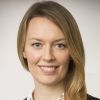
Jana Wattenberg is a Lecturer in Security at the Department of International Politics, Aberystwyth University, and a UKRI-funded Marie Skłodowska-Curie Global Fellow. She holds a dual affiliation with the School of International Service at American University and Aberystwyth University for her research project 'Women and the Bomb' (2022–2025). She is also a Senior Fellow with Women in International Security (WIIS), contributing to gender-inclusive security scholarship.
Research Interests: Jana’s research critically examines the persistence of nuclear weapons through the lens of ideas and discourse. She investigates how entrenched beliefs—such as nuclear disarmament being a distant goal—perpetuate the global nuclear order. Her work further explores gendered dynamics in nuclear politics, analyzing the roles women have played in nuclear weapons programs and how gender stereotypes shape disarmament debates. Her scholarship intersects feminist theory, critical security studies, and global nuclear governance.
The recent publication 'More Women, Fewer Nukes?' reflects her focus on gender essentialism and the assumption that women are inherently more peaceful, which she critically unpacks. Her articles demonstrate a thematic concentration on the humanitarian consequences of nuclear weapons, the social construction of nuclear legitimacy, and the marginalization of feminist perspectives in mainstream security discourse.
Scientific Awards:
- Marie Sklodowska Curie Global Fellowship (funded by UKRI)
- Senior Fellow, Women in International Security (WIIS)
Advising and Grants: Jana is co-Principal Investigator on the externally funded project 'Women and the Bomb' under Horizon Europe. While no formal students are listed, she was herself a PhD candidate supervised by Prof. J. Ruzicka and Dr. B. Bliesemann de Guevara. Her research is supported by competitive international funding and engages with policy communities.
Labs and Teams: Jana collaborates with international networks, including participation in the 'Feminism and the Nuclear World' working group (2022–2024), and presents at high-level forums such as the UN General Assembly First Committee side events. Her work is embedded in transnational academic and policy-oriented communities focused on disarmament and gender equality.