معرفی
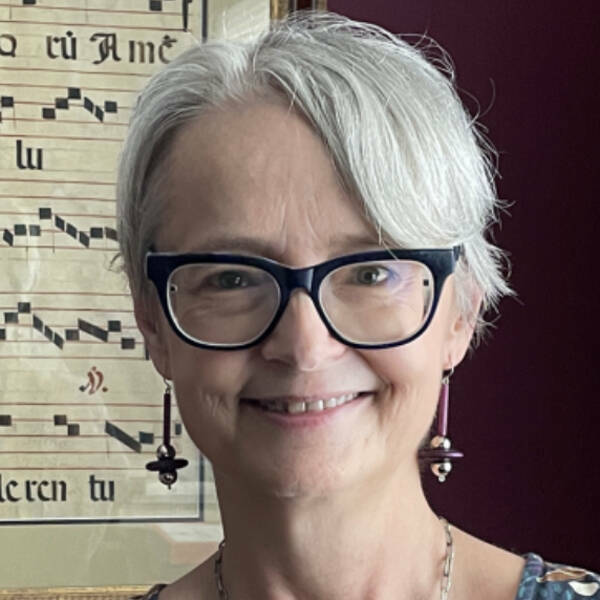
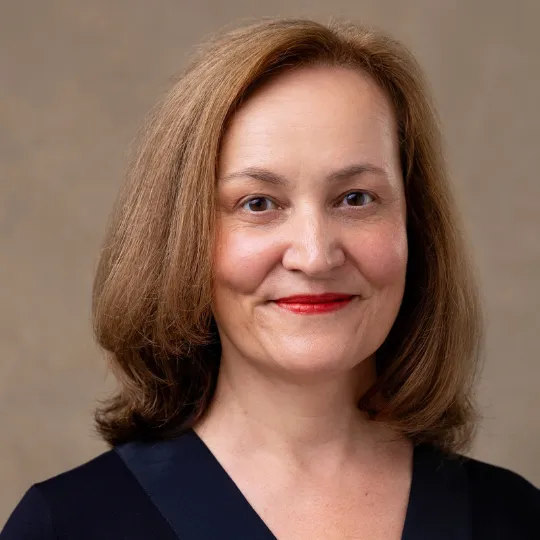
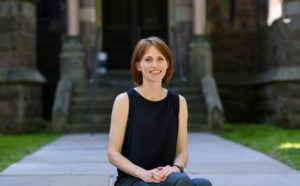
Jamie L. Reuland serves as Assistant Professor of Music at Princeton University's Department of Music within the School of Arts and Humanities. She is also an associated faculty member at the Seeger Center for Hellenic Studies and in the Program of Medieval Studies. Previously, she held the position of Elias Boudinot Bicentennial Preceptor from 2019-2022 and taught at Stanford University as a Mellon Fellow in the Humanities.
Dr. Reuland earned her B.A. from Dickinson College, followed by an M.A. and Ph.D. from Princeton University. Her academic journey reflects a deep commitment to medieval music studies, particularly focusing on the Mediterranean world.
Her research centers on the intellectual, aesthetic, and political history of medieval music, with particular emphasis on the intersections between musical texts, material culture, and political life in the late-medieval Mediterranean. She approaches historical and theoretical questions through musical performance and practice, exploring how music functions as both metaphor for and constitutive element of political life. Her work spans Venetian music history, medieval song traditions, music notation, liturgical drama, and the relationship between music and visual culture.
Her publications reveal a consistent focus on how music shaped and was shaped by political formations, particularly in Venice's Mediterranean empire. Her scholarship demonstrates expertise in musical paleography, manuscript studies, and interdisciplinary approaches that connect music with art history, political theory, and cultural anthropology. She has made significant contributions to understanding how musical practices informed civic identity, religious ritual, and political representation in the medieval world.
- Andrew W. Mellon Foundation Fellowship
- American Council of Learned Societies Fellowship
- Fulbright Foundation in Greece Fellowship
- Medieval Academy of America Fellowship
- Gladys Krieble Delmas Foundation Grant
At Princeton, Dr. Reuland co-founded LUDUS, an interdisciplinary working group devoted to the study of the Middle Ages in its live, plastic, and time-bound dimensions. Through LUDUS, she regularly hosts scholars, performers, and practitioners of historical art forms. Her teaching reflects her research interests, with courses on the history of choral music, musical paleography and notation, music and art, music and fiction, music in the global Middle Ages, medieval music drama, music and the environment, Hildegard of Bingen, the twelfth century, and trecento song. She approaches historical questions through musical performance and practice, creating a distinctive pedagogical method that bridges scholarship and performance.
Her office environment reflects her scholarly approach, featuring heavy musicological reference works alongside poetry collections and historical artifacts that connect music with broader cultural practices. She maintains an active research agenda that includes projects on musical fragments, bells, relics, earthquakes, and Josquin des Prez, alongside her primary work on medieval song and political representation.