معرفی
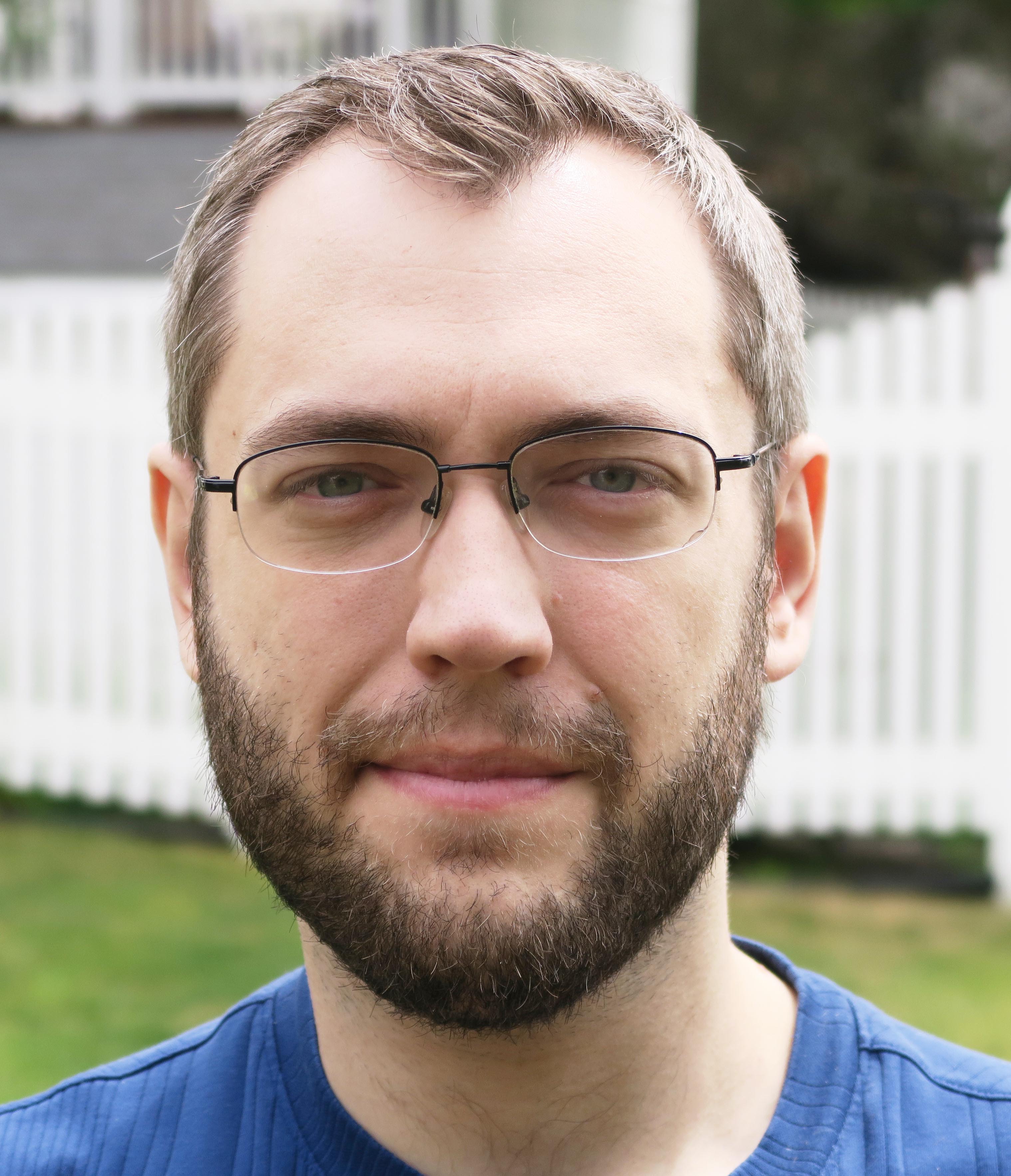
James E. Hanson is an Assistant Professor of Mathematics at Iowa State University, specializing in mathematical logic with a particular focus on model theory and its interactions with real analysis. His research bridges pure mathematics and theoretical physics, reflecting his earlier background in high energy theoretical physics.
- Ph.D. in Mathematics, University of Wisconsin–Madison (December 2020)
- M.A. in Physics, University of Wisconsin–Madison (December 2016)
- B.Sc. in Mathematics and Physics, University of Minnesota, Twin Cities (May 2012)
Hanson's research interests center on continuous logic, model theory, and their applications. His work explores the connections between logical structures and metric spaces, with significant contributions to stability theory, categoricity in continuous logic, and the study of definable sets in metric structures. He has made important advances in understanding forking independence, Morley sequences, and Keisler measures within the framework of continuous logic.
Hanson's publication record shows a clear trajectory from theoretical physics to mathematical logic. His recent work (2023-2025) is almost exclusively focused on continuous logic and model theory, with particular attention to categoricity, strongly minimal sets, and independence relations. His publications demonstrate a sophisticated integration of topological, metric, and logical perspectives, establishing him as a significant contributor to the development of continuous model theory.
Hanson is actively involved in the logic community, having presented his research at numerous prestigious venues including the Logic Colloquium, Association for Symbolic Logic meetings, and various university logic seminars. Notably, he hosts a mirror of the former Model Theory wiki, preserving valuable reference material for the community after the original wiki was deleted in 2023.
In addition to his research, Hanson has contributed to educational efforts in logic, giving introductory talks on continuous logic and participating in graduate student conferences. His early work in theoretical physics demonstrates the interdisciplinary nature of his mathematical thinking, which continues to inform his approach to model-theoretic problems.