معرفی
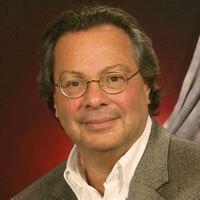
J. McBride serves as a Clinical Assistant Professor at New York University, specializing in interdisciplinary research at the intersection of law, religion, and critical theory. His work bridges legal scholarship with religious studies and socio-political analysis, contributing to contemporary debates on ethics, power structures, and cultural phenomena.
McBride's academic foundation spans multiple disciplines:
- Ph.D. in Religion and Social Ethics from the Graduate Theological Union (joint program with UC Berkeley)
- J.D. from Benjamin N. Cardozo School of Law
- M.A. in Religion from the University of Chicago
- B.A. in Humanities from Johns Hopkins University
His research integrates Law, Religious Studies, Politics, Psychoanalysis, Political Economy, and Feminist and Critical Theory to dissect power dynamics in legal systems, religious institutions, and societal structures. Key investigations include gender violence, financial capitalism, constitutional interpretation, and the psychological underpinnings of collective behavior, often employing Girardian mimetic theory to expose hidden mechanisms of scapegoating and ritual violence.
McBride's publications reveal a cohesive trajectory of interdisciplinary critique, consistently applying theoretical frameworks to real-world issues from Wall Street finance to prison reform. His work demonstrates how legal structures interact with religious narratives and economic systems, particularly evident in analyses of postmodern capitalism, gender-based violence, and constitutional jurisprudence.
Notable recognitions include:
- Gustavus Myers Foundation Award for Outstanding Book in Human Rights (1996)
- Summer Grant for Liberal Studies Tech Academy, NYU (2010)
- Golding Fellowship covering full law school tuition (1995-98)
- National Endowment for the Humanities Stipend (1989)
- Tenure at Fordham University (1994)
As an active scholar-attorney, McBride leverages dual expertise through New York State Bar membership and American Academy of Religion affiliation. His research has attracted multi-institutional funding including Ford Foundation, Luce Foundation, and National Endowment for the Humanities support, reflecting the significance of his cross-disciplinary approach to societal challenges.