معرفی
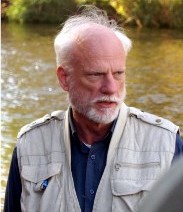
J. Barry Maynard is a Professor at the University of Cincinnati, where he has served since 1972, rising from Assistant Professor to Full Professor in 1985. His research program focuses on the geochemistry of metals at Earth's surface, particularly manganese, iron, copper, and lead, across diverse systems including ore deposits, acid mine drainage remediation, and drinking water infrastructure.
He earned his PhD from Harvard University in 1972. His educational foundation in geochemistry underpins his interdisciplinary approach to environmental and economic geology problems.
Dr. Maynard's research spans ore deposit geochemistry, acid mine drainage remediation, and drinking water corrosion science. His work integrates isotope geochemistry, sedimentology, and environmental engineering to address metal behavior in natural and engineered systems. Key projects include sulfur isotope studies of constructed wetlands, manganese ore formation through geological time, and lead/copper release mechanisms in water distribution networks.
His publication record shows consistent focus on metal geochemistry in sedimentary systems, with recent work emphasizing drinking water quality challenges and paleoenvironmental reconstructions using sulfur isotopes. The research demonstrates strong connections between fundamental geochemical processes and practical environmental applications.
Scientific recognition includes:
- National Associate of the National Academy of Sciences (2002)
Dr. Maynard has supervised 9 PhD and 24 Master's students. His research program has secured over $237,000 in funding from agencies including the Environmental Protection Agency, Water Research Foundation, and Indiana Department of Natural Resources, primarily supporting field studies of acid mine drainage treatment systems and drinking water corrosion mechanisms.
He leads a research group investigating sulfur and metal geochemistry across three primary domains: sediment-hosted ore deposits (Red Dog deposit, Witwatersrand goldfields), acid mine drainage remediation (constructed wetlands, anoxic limestone drains), and drinking water distribution systems (lead/copper corrosion, iron tubercle formation), utilizing integrated field, laboratory, and isotopic approaches.