معرفی
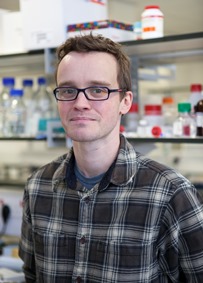
Iain Chalmers is a Senior Lecturer in Veterinary Biosciences at the Department of Life Sciences, Aberstwyth University, UK. He has been in this position since 2022, having previously served as a Lecturer in Veterinary Biosciences at IBERS (Institute of Biological, Environmental and Rural Sciences), Aberstwyth University from 2013-2022. His academic journey includes an EU-funded Post-Doctoral Research Associate position (2010-2013), a Research Technician role (2008-2009), and completion of a Wellcome Trust PhD programme at the University of Cambridge (2002-2009) under Dr. Karl Hoffmann. He holds a BSc (Hons.) in Immunology from Edinburgh University (1998-2002).
Dr. Chalmers' research focuses on the identification and characterisation of helminth proteins essential to parasite survival in the host, with the aim of discovering novel vaccine candidates and drug targets while gaining a deeper understanding of host-parasite interactions. His work employs bioinformatic approaches to examine the evolution of gene families (such as the SmVAL family) across parasitic and non-parasitic species. His research portfolio demonstrates strong expertise in Schistosoma biology, helminth protein characterization, and the development of novel therapeutic approaches against parasitic diseases.
Analysis of his recent publications reveals a consistent focus on Schistosoma mansoni research, particularly examining venom allergen-like (VAL) proteins, extracellular vesicles, and potential drug targets. His work spans molecular characterization, bioinformatic analysis, and experimental validation of potential therapeutic targets, with increasing collaboration across international research teams in recent years. The research shows a progression from basic characterization of parasite proteins toward more applied studies focused on drug discovery and vaccine development.
Scientific Recognition:
- Queen's Anniversary Prize 2023 (as part of a research team at Aberstwyth University)
Dr. Chalmers serves as Degree Programme Coordinator for the BSc Veterinary Biosciences program. His research contributes to Sustainable Development Goals related to good health and well-being, particularly in addressing neglected tropical diseases caused by parasitic worms. His work demonstrates ongoing commitment to both fundamental parasitology research and its translational applications for improving human and animal health.