معرفی
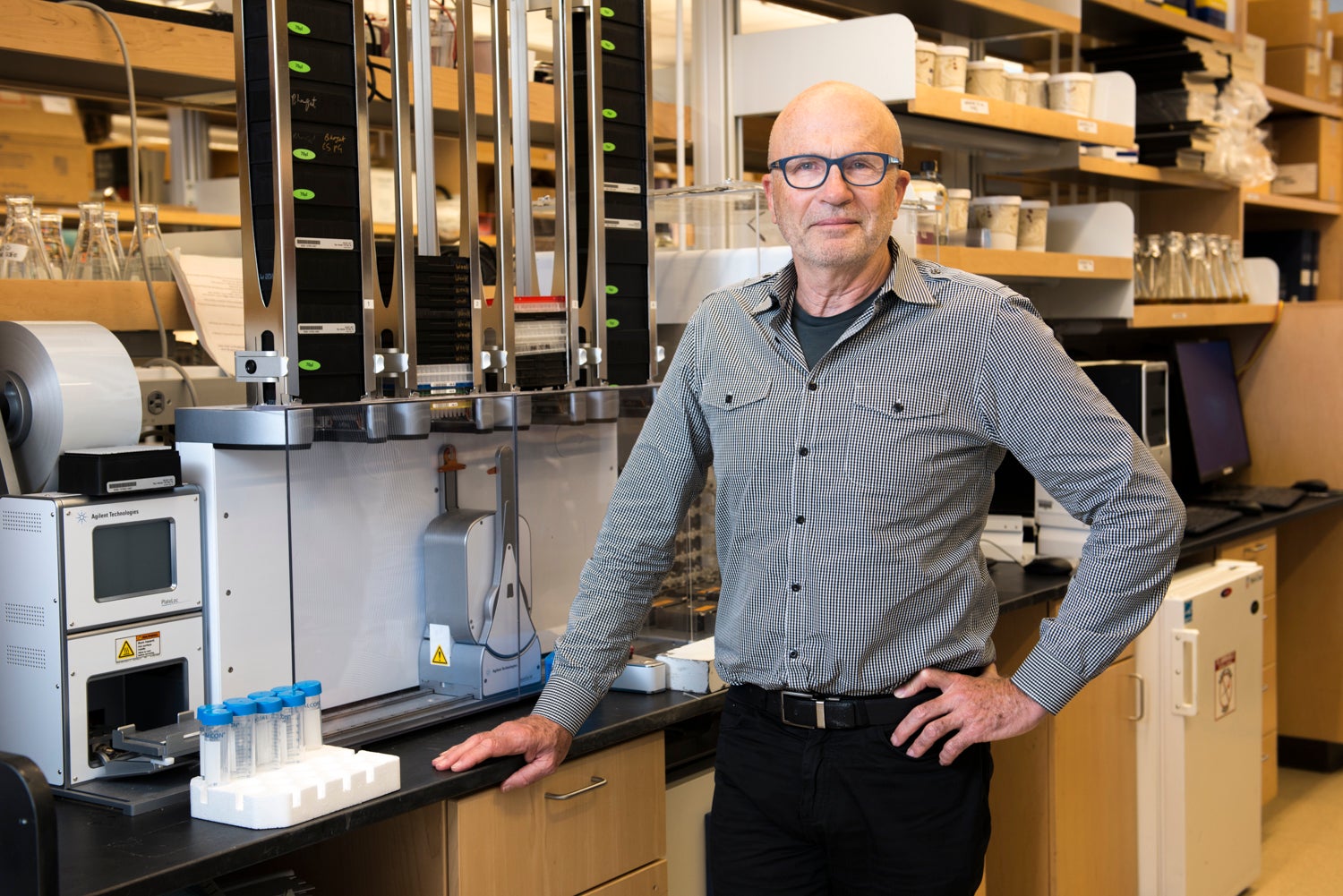
Hynek Wichterle is a Professor holding joint appointments in the Departments of Pathology & Cell Biology, Neuroscience (in Neurology), and Rehabilitation and Regenerative Medicine at Columbia University Medical Center. He serves as Co-Director of the Columbia Stem Cell Initiative and Vice-Chief of the Division of Regenerative Medicine in the Department of Rehabilitation & Regenerative Medicine. He also holds the administrative title of Co-Director of the Motor Neuron Center.
Dr. Wichterle received his M.S. degree from Charles University in Prague and his Ph.D. degree from The Rockefeller University. He trained at Columbia University, where he became an assistant professor in 2004 and associate professor in 2012 before achieving his current professorship.
Wichterle's research focuses on modeling nervous system development in vitro using stem cell technologies. His laboratory has pioneered efficient methods for differentiating pluripotent embryonic stem cells into specific subtypes of spinal motor neurons and interneurons. His work combines stem cell differentiation with CRISPR-based genome editing and inducible transgene expression to decode transcriptional programs controlling neural development. A major focus of his research involves using both mouse and human pluripotent stem cells to model motor neuron degenerative diseases like amyotrophic lateral sclerosis (ALS), with the goal of discovering new neuroprotective drugs.
Analysis of his recent publications reveals a consistent focus on developmental neuroscience, stem cell biology, and neurodegenerative disease modeling. His work spans molecular mechanisms of neuronal specification, chromatin regulation, and therapeutic applications for motor neuron diseases. Over time, his research has evolved from foundational work on motor neuron differentiation to increasingly sophisticated models of disease mechanisms and drug discovery approaches.
Dr. Wichterle has made significant contributions to understanding the transcriptional programs that control motor neuron identity and function. His laboratory has assembled global maps of genomic regulatory elements controlling motor neuron expression programs, effectively decoding the 'syntax and grammar' of the transcription factor language that specifies neuronal cell identity during embryonic development.
His research program benefits from extensive collaborations across multiple disciplines, including molecular biology, genomics, and therapeutic development. The laboratory's unique stem cell-based screening platforms have enabled the identification of compounds that protect motor neurons from degeneration, bridging basic science with potential clinical applications for ALS and related disorders.