معرفی
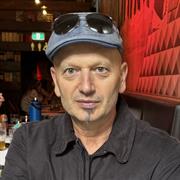
Hariz Halilovich is a Professor of Global Studies and Australian Research Council Future Fellow at RMIT University's School of Global, Urban and Social Studies (GUSS). His research focuses on place-based identities, forced migration, genocide studies, memory politics, and human rights. He has held academic roles at RMIT, Monash University, UCLA, and the University of Sarajevo. Halilovich’s work bridges theory and practice, influencing policy for governments and NGOs worldwide. His applied research has informed migration policies in Australia, Bosnia & Herzegovina, and the EU.
Education: While formal educational qualifications aren’t explicitly listed, his academic career spans over two decades with postdoctoral and visiting roles at leading institutions. His research grants include ARC Fellowships and EU-funded projects like HORIZON 2020’s INFORM initiative.
Research Interests: Halilovich examines how communities navigate displacement, trauma, and identity reconstruction post-conflict. He explores memory through digital archives, transnational activism, and cultural practices. Notable projects include studies on Roma refugees, Bosnian diasporic communities, and the legacies of the Srebrenica genocide.
Publications: His books include Places of Pain (2013), Writing After Srebrenica (2017), and Monsters of Modernity (2019). Recent articles analyze memory politics in Bosnia, digital diasporas, and transnational entrepreneurship.
Awards: Highlights include the ARC Future Fellowship (2019) and multiple RMIT awards for research excellence. His work has been recognized in scholarly and creative spheres, including literary awards for short stories.
Teaching & Supervision: Halilovich teaches courses on global migrations, multiculturalism, and conflict studies. He supervises PhDs on topics like Roma refugees in Poland and productive mourning in diaspora contexts.
Labs/Initiatives: He leads projects at RMIT’s Social Equity Research Centre and collaborates internationally on initiatives like the EU’s INFORM program. His work emphasizes experiential learning, field-based studies, and action research.