معرفی
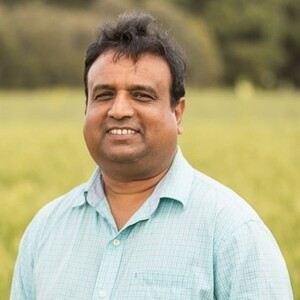
Dr. Hanwen Wu is a researcher at the Dr Gulbali Research Institute, Charles Sturt University, with extensive contributions in agricultural and biological sciences, particularly in weed science and sustainable crop management. He is actively involved in research and is a registered supervisor, indicating a formal academic role.
- Institution: Charles Sturt University
- Department: Dr Gulbali Research Institute
- Email: hwu@csu.edu.au
- ORCID: https://orcid.org/0000-0001-5157-4977
Dr. Wu's research focuses on the biology and management of invasive weeds, including species like Solanum viarum, Chloris virgata, and Solanum elaeagnifolium. His work spans germination ecology, herbicide resistance, and integrated weed management strategies in Australian cropping systems. Key themes include crop-weed interactions, seedbank dynamics, and sustainable agricultural practices.
The most recent publications highlight trends in weed suppression through crop interference, use of sheep grazing for biological control, and adaptive strategies for herbicide-resistant weeds. His research integrates field studies, environmental modeling, and practical farming applications, contributing significantly to both scientific knowledge and agricultural extension.
Dr. Wu has participated in major industry conferences, including the 7th International Weed Science Congress (2016) and the 23rd Australasian Weeds Conference (2024), and has been featured in press and media discussing farmer-ready solutions for invasive weed control and herbicide resistance testing.
As a registered supervisor, Dr. Wu advises research students, though specific names are not listed. His collaborative work with researchers such as Asaduzzaman, Piltz, and Pratley underscores strong national and international research networks. He has contributed to grants and projects focused on sustainable agriculture, weed resistance, and cropping system resilience.
Dr. Wu is associated with the Dr Gulbali Research Institute, a center dedicated to advancing weed science and sustainable agriculture in Australia. His work contributes to the institute's mission of delivering research-based solutions to real-world agricultural challenges.