معرفی
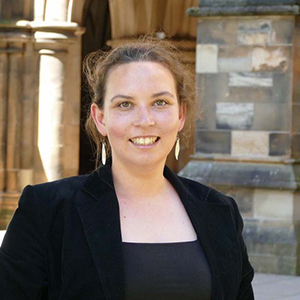
Dr Franziska Paul is Lecturer in Political Economy at the University of Glasgow's Adam Smith Business School, specializing in Management. She co-leads the Political Economy Futures Forum and contributes to the Entrepreneurship, Development and Political Economy research cluster, focusing on public ownership models and economic democracy.
Her academic credentials include:
- PhD in Geography, University of Glasgow
- MRes in Human Geography, University of Glasgow
- MA (Hons) in Geography-Sociology, University of Aberdeen
Paul's research examines ownership transformation across social, economic, and ecological dimensions, with emphasis on de-privatisation and democratisation processes. She investigates public ownership in energy, waste, transport, and banking sectors through critical political economy frameworks, analyzing trade union environmentalism and community wealth building initiatives in Germany and the United States.
Recent publications (2023-2025) demonstrate concentrated analysis of remunicipalisation movements and public banking alternatives, particularly examining local state dynamics in post-neoliberal contexts. Her work consistently connects energy transition with democratic ownership models, highlighting transnational case studies of municipal takebacks and community-led financial institutions.
Key recognitions include:
- 2024 Engagement Through Research Award for Public Futures Database work
- 2022-2023 Wiley Top Cited Article Award for remunicipalisation research
Paul supervises doctoral research on alternative economic approaches and contemporary labor issues. Current funding includes £883,000 Norges Forskningsråd grant for PHASE project on North Sea energy transitions, £30,000 for Political Economy Futures Forum leadership, and £4,710 International Partnership Development Fund award for public banking networks research.
She actively contributes to the Public Futures Database (global de-privatisation case repository), Public Banking Project (led by Thomas Marois), and Global Remunicipalisation research consortium, while maintaining collaborative ties with Norwegian, German, and US institutions.