معرفی
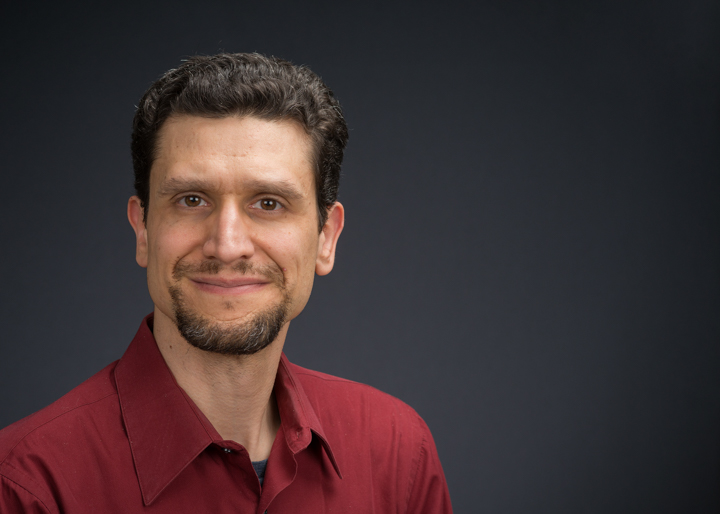
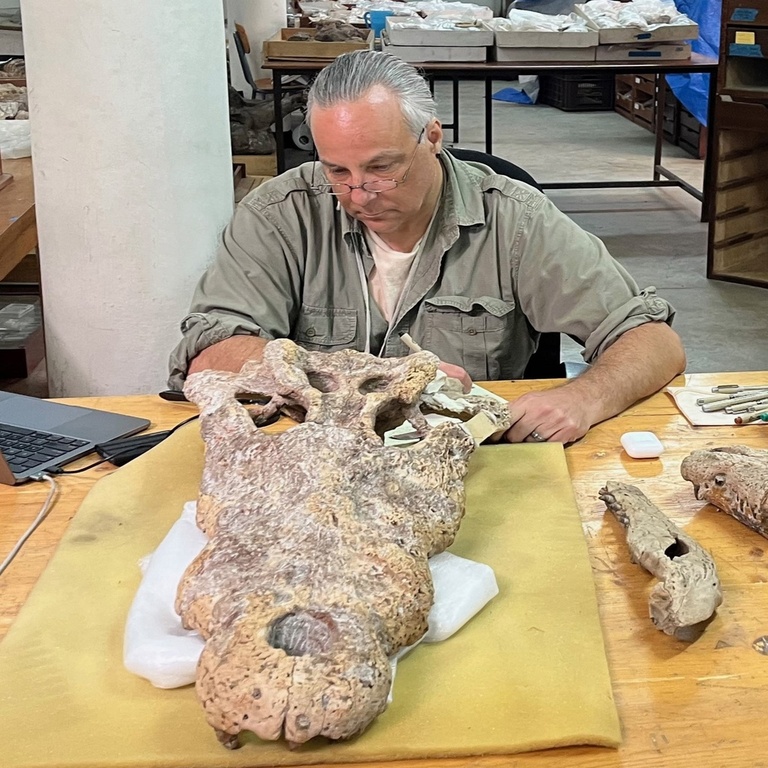
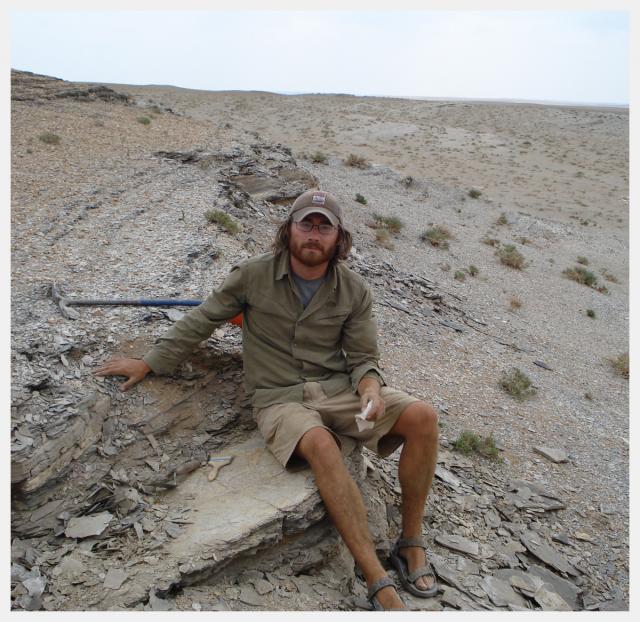
Eric Wilberg is an Assistant Professor and Graduate Program Director in the Department of Anatomical Sciences at Stony Brook University’s Renaissance School of Medicine. A vertebrate paleontologist, he investigates the evolution of crocodylomorph archosaurs, particularly their phylogeny and morphological adaptations across time.
Education:
- PhD, University of Iowa (2012)
Research Interests:
Wilberg’s research centers on the evolutionary history of crocodylomorphs, focusing on their morphological diversification and ecological transitions. He employs geometric morphometrics and comparative phylogenetic methods to explore cranial evolution, especially the recurrent snout shapes that reflect ecological specialization. His work on thalattosuchians—extinct marine crocodylomorphs—has clarified their phylogenetic position and the morphological innovations that facilitated marine adaptation.
He is particularly interested in how the crocodylomorph skull, especially the snout, has evolved as the primary interface with the environment. His studies reveal patterns of convergence and disparity in cranial form across the group’s temporal range, contributing to broader understanding of vertebrate adaptation.
Publications Overview:
Wilberg’s 24 peer-reviewed publications span from 2011 to 2025, encompassing phylogenetic analyses, morphometric studies, and taxonomic revisions. His work addresses fundamental questions in crocodylomorph evolution, including the timing and drivers of marine transitions, the structure of cranial disparity, and the resolution of long-standing phylogenetic controversies.
Scientific Awards:
- No awards listed in the provided text.
Advising and Grants:
As Graduate Program Director in Anatomical Sciences, Wilberg oversees graduate training and likely mentors PhD and Master’s students, though specific advisees are not named in the text. No grant details are provided.
Labs and Teams:
Wilberg is affiliated with the Department of Anatomical Sciences at Stony Brook University, and collaborates extensively with researchers such as Christopher Brochu, Alan H. Turner, and Stephen L. Brusatte, indicating active participation in interdisciplinary paleontological research networks.