معرفی
Eric Asaba is a Senior Lecturer and Docent in occupational therapy at Karolinska Institutet, with a joint appointment to Stockholms Sjukhem Hospital in Stockholm. He also serves as a guest professor at Tokyo Metropolitan University in Japan. His academic career spans leadership roles including faculty board member for the doctoral program in healthcare sciences, representative on the Strategic and collaborative committee for education between KI and Stockholm Region, and member of the pedagogic academy at KI since 2015.
His previous leadership roles include vice head at the Department of Neurobiology, Care Sciences, and Society (2019-2023), head of the division of occupational therapy (2014-2019), and faculty representative on the committee for higher education at KI (2019-2022).
Dr. Asaba's educational background includes a Ph.D. in occupational science from the University of Southern California (2005), an M.S. in occupational therapy from Springfield College (1995), a B.A. in psychology from Cornell College (1993), and a graduate certificate in public health research from Harvard University (1999).
His primary research interests focus on participation and inclusion among people who risk marginalization, including those who are at risk of losing their jobs, have disabilities, or are migrants. His work examines how people engage in social and occupational contexts and how to involve marginalized populations in research.
Dr. Asaba's research spans several key areas:
- Migrant experiences and integration
- Disability and participation in everyday life
- Return to work after illness or injury
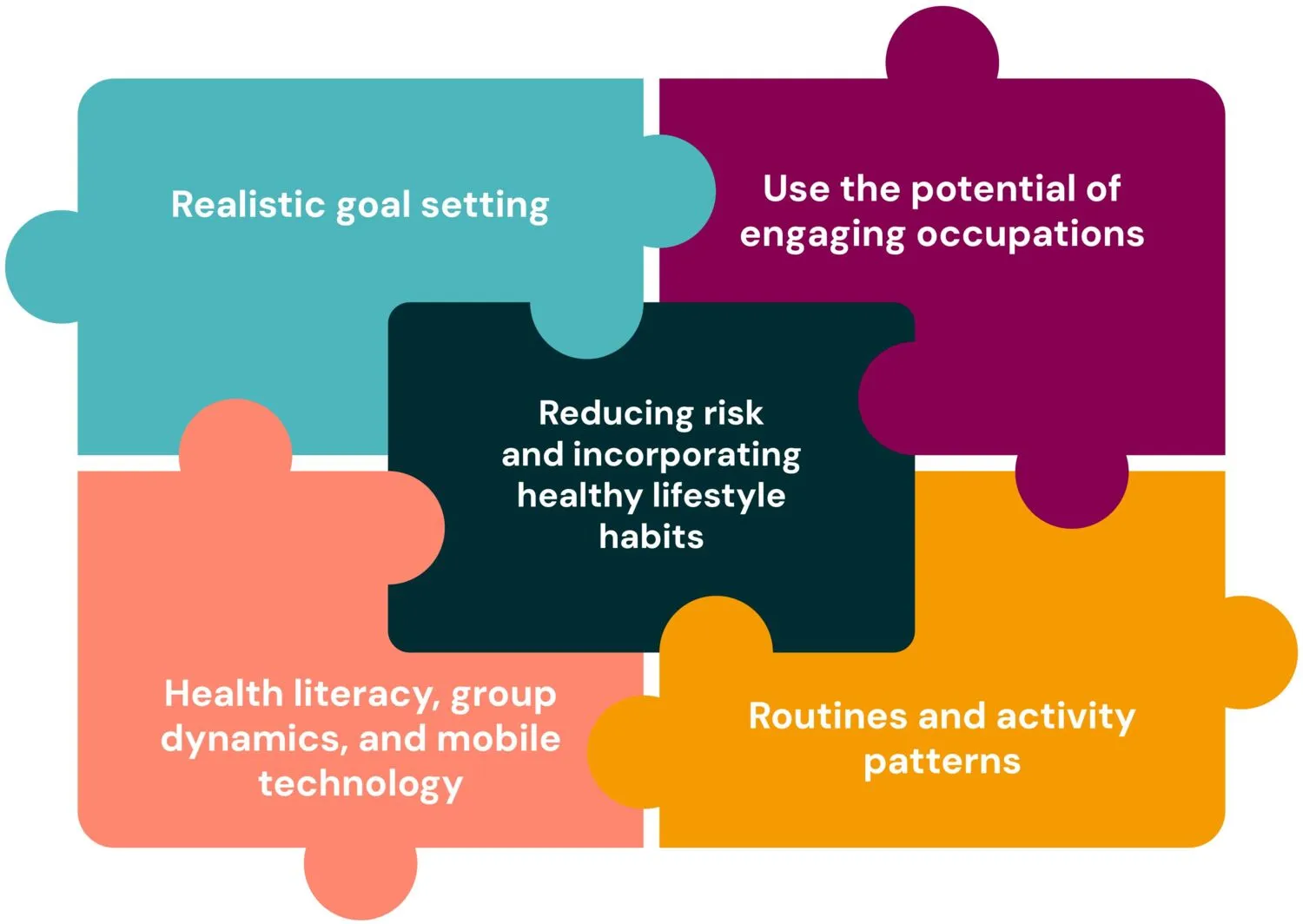
- Stroke prevention through engaging everyday activities
- Occupational science theory development
- Participatory and visual research methods
His research methodology often employs narrative analysis, photovoice, and other qualitative approaches to understand the lived experiences of marginalized populations.
Dr. Asaba has secured significant research funding from organizations including FORTE, SFO-V, Kamprad, and the Swedish Aging Research Foundation. His current major projects include the ENGAGE research group focused on "Enacting health and change through everyday activity" and the Make My Day stroke prevention program.
His scientific contributions include numerous publications in occupational science, with a focus on conceptualizing occupation in different country contexts and utilizing occupation in research addressing migration, disability, return to work, and illness prevention.
Dr. Asaba is actively involved in education across all academic levels:
- Course Leader for doctoral education courses on Observation and visual methods, Preventing Illness or Promoting Health, and Health Science and Implementation
- Responsible for the Karolinska Institutet - Tokyo Metropolitan University exchange program focused on interprofessional education
- Teaches conceptual coursework and research methods in masters and doctoral programs, with a focus on occupational science, narrative, and participatory visual methods
- Supervises masters and doctoral students
His teaching philosophy emphasizes creating environments where learning emerges from the wishes of the learner and is both internally and externally rewarded. He believes creative environments that encourage students to take risks and embrace challenges facilitate sustainable learning.
Dr. Asaba's scientific awards include the Penelope Louise Richardson Award from the University of Southern California, the Wilma West Scholarship from the California Foundation for Occupational Therapy, and membership in the Omicron Delta Kappa National Leadership Honor Society.
His research has practical applications in healthcare settings, particularly in developing interventions that promote health through engaging everyday activities, with a special focus on stroke prevention and supporting marginalized populations.